
UN Warns Expansion of Madrassas Could Deepen Afghanistan’s Education Crisis
UN Warns Expansion of Madrassas Could Deepen Afghanistan’s Education Crisis
——————————————
The UN Special Rapporteur on human rights in Afghanistan, Richard Bennett, has warned that the rapid expansion of religious schools under the current authorities could have long-term consequences for Afghanistan’s education system and social development.
In a new report, Bennett said that while religious education has historically been part of Afghanistan’s schooling system, the growing number of madrassas raises concerns as they increasingly appear to be replacing formal education rather than complementing it. The report noted that registered religious schools increased from around 5,000 before the Taliban returned to power to more than 23,000 by September 2025.
Bennett linked the expansion to broader changes in Afghanistan’s education landscape, including the continued exclusion of girls from secondary schools and universities. He warned that limiting access to formal education could create lasting economic and social challenges.
The report said madrassas have become one of the few remaining educational options for many girls excluded from mainstream schools, but raised concerns over curricula, restrictions on students, and the impact of some teachings on social attitudes, particularly regarding women’s rights and gender roles.
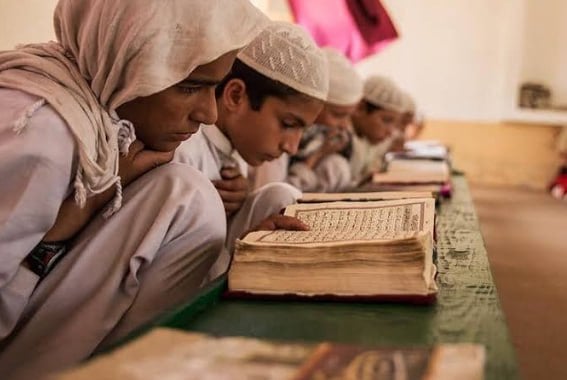
Independent reports have also highlighted the rapid growth of Afghanistan’s madrasa network, with millions of students enrolled. Some institutions focus primarily on Quranic studies, Islamic jurisprudence, and Arabic, while others include limited general subjects.
The UN has repeatedly called for equal access to education for Afghan women and girls, warning that continued restrictions could affect the country’s future workforce, social stability, and development.