
Rights Groups Raise Concerns Over Saudi Measures in Eastern Province Targeting Shia, Surge in Drug-Related Executions

Rights Groups Raise Concerns Over Saudi Measures in Eastern Province Targeting Shia, Surge in Drug-Related Executions
——————————————
Saudi authorities are facing renewed criticism from rights advocates over measures affecting Shia communities in the Eastern Province and the country’s continued use of the death penalty in drug-related cases.
More details in the following report:
Rights observers have raised concerns over what they describe as increasing pressure on Shia communities in Saudi Arabia’s Eastern Province, particularly in Qatif and nearby Shia-majority towns.
According to Middle East News, citing human rights sources, local authorities have intensified inspection campaigns under a “Certificate of Compliance” program. Officials have reportedly carried out more than 4,563 field inspections, covering around 80 percent of commercial and residential properties, while beginning to issue heavy fines.
Critics say these measures have placed significant financial and administrative pressure on small businesses and local residents, particularly in Shia areas.
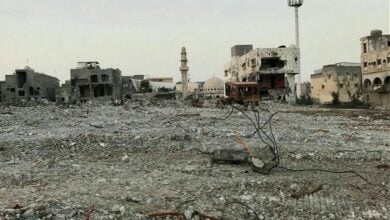
The report also pointed to demands that Shia property owners in Qatif provide religious endowment documents, alongside new plans linked to the Ministry of Energy to demolish parts of the Shia-majority towns of Safwa and Awjam under the pretext of expanding Aramco oil fields.
Local observers alleged that such projects could lead to property confiscation, forced displacement, and the deliberate dispersal of Shia communities, warning that they may weaken the religious and social identity of Shia residents in the region.
In a separate development, 63 national, regional, and international human rights organizations called for an end to the use of the death penalty in drug-related cases. The joint appeal, which included the European Saudi Organization for Human Rights, was issued on the International Day Against Drug Abuse and Illicit Trafficking.
The organizations addressed their statement to the United Nations Office on Drugs and Crime, the Commission on Narcotic Drugs, and UN member states, urging them to take a clear position against executions for drug offenses.
The statement said more than 1,200 executions related to drug cases were carried out worldwide in 2025, the highest number recorded so far, representing around 46 percent of all executions globally that year.
It added that Saudi Arabia was among the leading countries carrying out such executions, with 356 executions reported in 2025, including 240 in drug-related cases. This represented around 67 percent of all executions in the country that year, compared with 120 drug-related executions in 2024.
They called on the UN Office on Drugs and Crime to include the death penalty issue in its future reports and strategies and to ensure that international cooperation and technical support do not contribute to the issuing or implementation of death sentences.