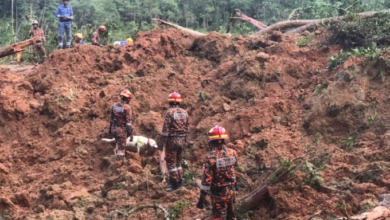

Hundreds Killed or Missing After Floods and Landslides on Nepal-Tibet Border
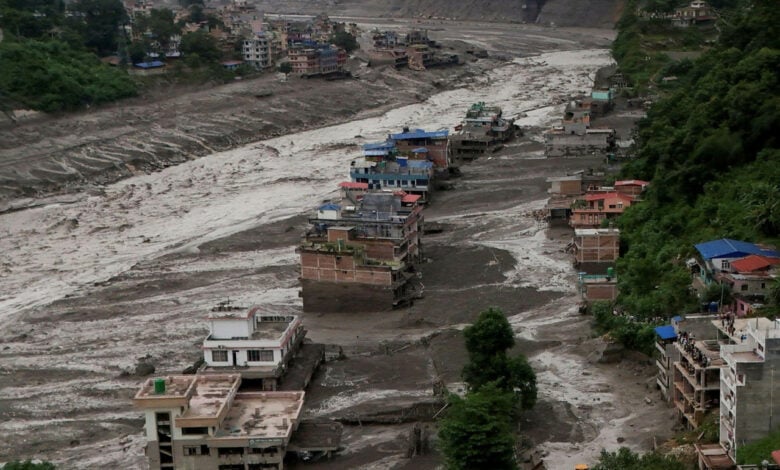
Devastating floods and landslides that struck the border areas between Nepal and Tibet have killed more than 160 people and left hundreds missing, including foreign tourists, as search and rescue operations continue amid warnings of possible further flooding.
Nepalese police said they had recovered 157 bodies following the floods, while emergency teams continued searching for missing people and evacuating residents from threatened areas to safety. On the Chinese side, state media reported that three people were killed and 265 others were missing after a landslide at a border crossing in Tibet.
Circulating footage showed huge masses of mud and debris sweeping through facilities and vehicles in the disaster-hit area. Chinese authorities said they had mobilized around 800 emergency personnel and 150 vehicles, along with trained dogs and speedboats, to take part in rescue operations.
Nepal’s tourism authority said a large number of tourists remain missing, including 142 Indians and citizens of Australia, Britain, Malaysia, the Netherlands, Portugal, South Africa, South Korea, and the United States.
Meanwhile, a representative of the International Federation of Red Cross and Red Crescent Societies in Nepal said that villages and commercial areas had suffered extensive destruction, adding that efforts were underway to send emergency supplies to the affected areas.
The final causes of the disaster have not yet been determined. Preliminary assessments suggest that an ice-rockslide may have blocked the course of one of the rivers before the obstruction collapsed, sending a powerful surge of water toward downstream areas.
Experts warned that if an obstruction remains in the river upstream, it could trigger another wave of flooding. They called for threatened areas to remain under close monitoring and for residents at risk to be evacuated.
The disaster also caused extensive damage to infrastructure. Nepal’s electricity authority said around 430 megawatts of power generation capacity had been affected, disrupting electricity supplies, while the Nepalese army continued conducting aerial searches for survivors and evacuating stranded people.
The disaster comes amid growing warnings about the impact of climate change in mountainous regions. Scientists say rising temperatures are contributing to increased risks of ice melt, landslides, flash floods, and more severe extreme weather events.