
The Shirazi Authority: Justice and Forgiveness are Pillars for Building a Righteous Society and Reducing Crime
The Shirazi Authority: Justice and Forgiveness are Pillars for Building a Righteous Society and Reducing Crime
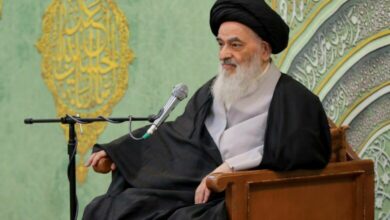
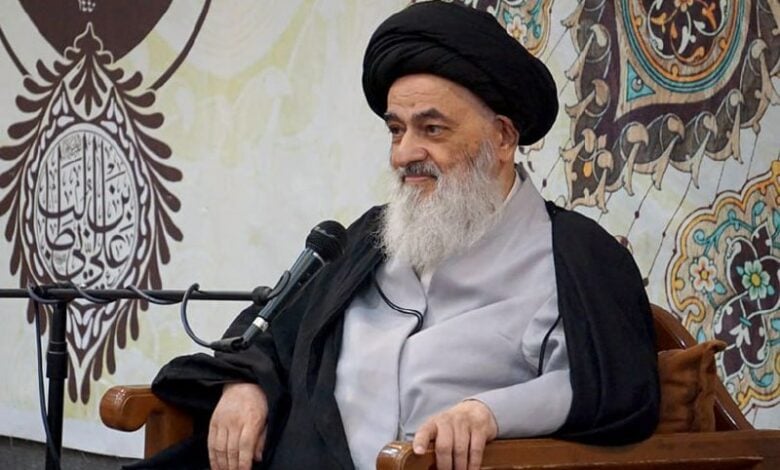
The supreme religious authority, His Eminence Grand Ayatollah Seyyed Sadegh Hosseini Shirazi, affirmed that justice and forgiveness are fundamental pillars in building righteous societies and achieving security and stability. He emphasized that their presence in the lives of individuals and communities contributes to reducing crime and spreading goodwill, while their absence leads to exacerbating problems, injustice, and conflicts.
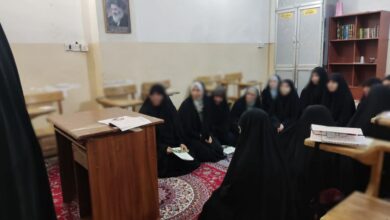
During a lecture in the “Lamp of Knowledge” series discussing justice and forgiveness, His Eminence stated that the differences in people’s directions, tendencies, and desires make societies susceptible to problems and disputes. However, adopting justice and forgiveness as a general approach could mitigate the effects of these differences.
He added, “If the general approach is justice and forgiveness, crime is reduced to the lowest possible level in the world, and righteousness flourishes to the highest degree possible.”
The Shirazi Authority highlighted that the Greatest Messenger (peace be upon him and his family) and the Pure Imams (peace be upon them) embodied these values in their practical conduct. They did not merely advocate for them but applied them in various aspects of life and with different segments of society.
He explained that the Noble Prophet (peace be upon him and his family) adhered to justice and forgiveness “with friend and foe, in peace and in war,” and in many situations with believers and the pious, even with hypocrites, thus providing a practical example of balancing the preservation of rights and forgiveness when capable.
His Eminence illustrated that a review of history reveals a strong link between the prevalence of justice and forgiveness and the stability and prosperity of societies, stating, “When we browse through history, we find that with the presence of justice and forgiveness, goodness is universal for all, and with their absence, evil becomes universally prevalent.”
The Shirazi Authority criticized the decline of the values of justice and forgiveness in several governments ruling Muslim societies in the name of Islam, arguing that mere affiliation and slogans are insufficient to achieve a righteous society unless coupled with the practical application of Islamic values in governance and interactions with people.
He called on everyone to begin applying these principles in various circles of their lives, starting from family and relatives, extending to colleagues at work and school, and different social relationships, asserting that the responsibility to establish a virtuous society begins with each individual adhering to what falls within their scope of responsibility.
The Shirazi Authority concluded by emphasizing the profound historical impact of these values, saying, “These two luminous words have illuminated history wherever they have been found, and history has darkened wherever they have been lost,” highlighting that embedding justice and forgiveness in the lives of individuals and state institutions is a pathway to achieving peace and righteousness and minimizing the causes of injustice and crime.