
Muslims in UK Represent 6% of Population Amid Growing Demographic and Economic Influence
Muslims in UK Represent 6% of Population Amid Growing Demographic and Economic Influence
————————————
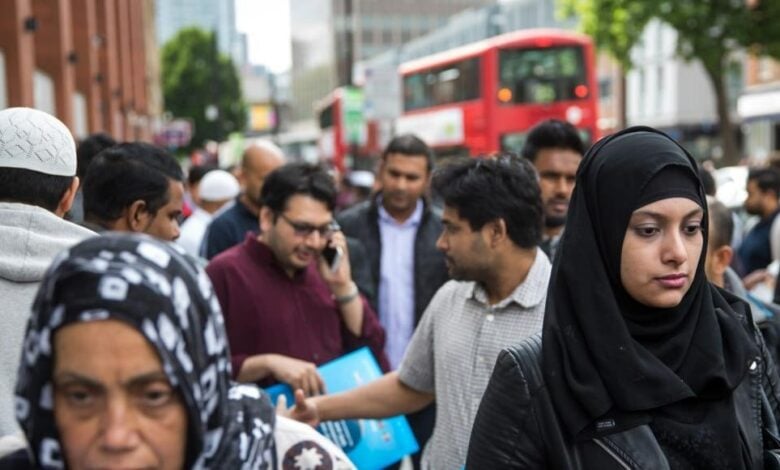
A new report by the British Islamic Council has highlighted the growing demographic, economic, and political presence of Muslims in the United Kingdom, revealing a community that now constitutes 6% of the UK population, with nearly 4 million people, and is increasingly influential in British society.
Titled “Muslims in Britain by the Numbers”, the report shows that the proportion rises to 6.7% in England, with approximately half of the Muslim population born in the UK. The community is notably young, with a median age of 27, compared to 40 nationally, and 46% under the age of 25, versus 29% of the general population. Experts note that this age distribution could politically impact future elections, particularly if the voting age is lowered to 16, potentially adding more than 150,000 new Muslim voters. In the 2024 general elections, Muslim voter participation reached record levels, with concentrations exceeding 20% in at least 32 constituencies.
Ethnically, Muslims are diverse: 66% are of Asian origin, primarily Pakistani and Bangladeshi, alongside Arab, African, Caribbean, European, and mixed communities. The population increased 32% from 2011 to 2021, adding roughly 1.2 million people, surpassing all other religious minorities combined.
The report highlights language and identity trends: 99% of UK-born Muslims speak English fluently, while 94% identify as British, compared to 55% among foreign-born Muslims.
Economically, disparities remain: only 41.5% of Muslims own homes (vs. 63% nationally), 28% live in social housing (vs. 17%), and nearly 40% reside in economically deprived areas, with just 6% in affluent areas. Educational attainment is on par with national averages: 33% hold university degrees, with women representing half of Muslim students. Female economic activity among Muslims has risen 37% over the past two decades.
The report also raises concerns over the criminal justice system, noting that Muslims make up 18% of prison populations in England and Wales, well above their demographic share, highlighting potential social and structural inequalities.
Overall, the study portrays a demographically young, economically active, and politically engaged Muslim community that is increasingly shaping local and national dynamics, while facing ongoing housing, economic, and social challenges.