
UN Warns Press Freedom in Afghanistan Has All but Collapsed
UN Warns Press Freedom in Afghanistan Has All but Collapsed
—————————————
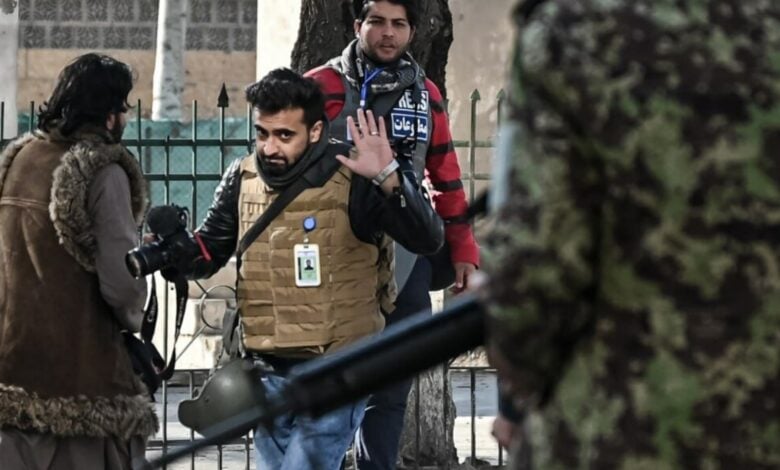
In a stark message marking World Press Freedom Day, the United Nations Special Rapporteur on human rights in Afghanistan said the country’s independent media environment has “almost completely” collapsed.
More details in the following report:
In his statement, Richard Bennett described the situation as a severe deterioration of press freedom since the Taliban returned to power in 2021.
In his appeal, Bennett warned that Afghan journalists now face intensified censorship, intimidation, arbitrary detention, and systemic restrictions on reporting, and called on the Taliban authorities to immediately and unconditionally release all detained journalists.
Data from the Afghanistan Journalists Center indicate that at least 34 journalists were detained in 2025, and advocacy groups report several journalists—including Shakib Nazari, Abuzar Sarem, Hamid Farhadi, and Bashir Hatef—remain in detention under Taliban custody.
Families of detained journalists have expressed deep concern about their safety and legal status, highlighting hazardous prison conditions and the lack of transparent legal processes.
According to Afghan media watchdogs and local journalists, the broader media sector is now increasingly dominated by self‑censorship born out of fear. Surveillance, threats of retaliation, and vague legal restrictions—especially under laws linked to the Taliban’s moral code—discourage critical reporting and independent narratives.
Afghanistan was ranked 175th out of 180 countries in the 2026 World Press Freedom Index by Reporters Without Borders, placing it among the world’s most restrictive environments for journalists.
Bennett described the collapse of an independent press as a “catastrophe for press freedom,” warning that it has deprived Afghan citizens of access to reliable and independent information. He urged the international community to strengthen support for Afghan journalists—both inside the country and in exile—through increased funding, technical assistance, and protection mechanisms.