
Widespread Crisis in Women’s Access to Justice in Afghanistan; 95% Refusal to Seek Legal Redress and Intensified Structural Exclusion
Widespread Crisis in Women’s Access to Justice in Afghanistan; 95% Refusal to Seek Legal Redress and Intensified Structural Exclusion
———————————
A recent study has revealed that the majority of women in Afghanistan are refraining from seeking legal recourse due to deep distrust in the judicial system. This situation has raised serious concerns about the growing injustice and human rights violations in the country.
Recent developments in Afghanistan’s judicial structure have created unprecedented challenges for women’s access to justice. According to data presented at an international seminar, many women not only lack access to their legal rights but also view the current system as unsafe and unreliable for filing complaints or pursuing cases.
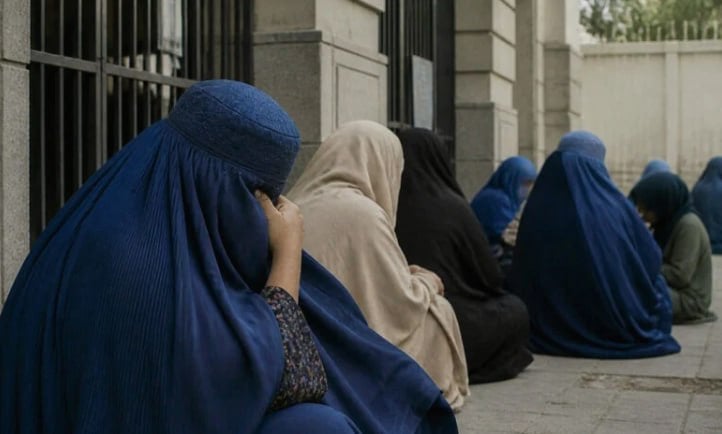
A report from the 8am newspaper, citing a study by the Women and Children’s Legal Research and Advocacy Network in collaboration with the University of Toronto, revealed that 95% of women avoid going to court due to their lack of trust in the Taliban-controlled justice system. Additionally, 65% of women reported having negative experiences when engaging with the courts.
The report highlights that after the August 2021 political changes, the judicial system underwent fundamental changes, with 81% of respondents noting significant shifts in this area. Furthermore, 91% believe that the removal of female professionals from the judiciary has had serious consequences for case handling.
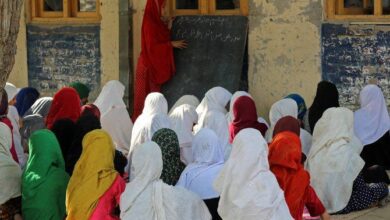
The findings also emphasize the lack of fair trial procedures and the expansion of arbitrary detentions, which have contributed to insecurity and instability in the lives of the Afghan people. Educational restrictions and the exclusion of women from public spheres are also part of a targeted campaign of marginalization.
Experts and legal activists mentioned in the report stress that the current judicial system not only fails to meet the needs of society but, in some cases, has become a tool of repression.
The report calls for coordinated global action and stronger accountability mechanisms to address the widespread violations of women’s rights. Participants in the seminar urged increased international pressure and support for civil society organizations, warning that without fundamental changes, women’s access to justice will remain in a critical state.