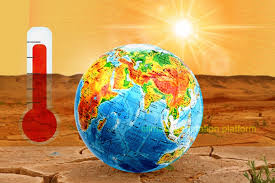

The United Nations Warns of Global Warming Surpassing the 1.5-Degree Threshold in a Few Years

The United Nations Warns of Global Warming Surpassing the 1.5-Degree Threshold in a Few Years
The United Nations Environment Programme (UNEP) has warned that global temperature rise is projected to surpass the 1.5-degree Celsius threshold above pre-industrial levels in the coming years. This is alarming as it could exacerbate extreme weather phenomena and increase pressure on ecosystems, glaciers, and low-lying coastal areas.
The programme explained that keeping global warming below the 1.5-degree Celsius mark is still theoretically feasible. However, it is now fraught with significant uncertainty and requires rapid and substantial reductions in greenhouse gas emissions, concurrently with enhancing carbon dioxide removal measures from the atmosphere.
The UNEP indicated that the likelihood of exceeding the targeted threshold necessitates countries to also focus on minimizing the duration that global temperatures remain above the 1.5-degree Celsius level to mitigate the environmental and climatic impacts stemming from continued warming.
Governments committed under the 2015 Paris Agreement to strive to limit the rise in average global temperatures to 1.5 degrees Celsius, aiming to reduce the risks of climate change and extreme weather phenomena.
According to the report, even in the most optimistic scenario, and with the implementation of all current national commitments, global warming may reach approximately 1.8 degrees Celsius above pre-industrial levels. Meanwhile, estimates based on currently applied policies suggest a more perilous trajectory.
The UNEP warned that under current policies, average global warming could reach around 2.6 degrees Celsius by the end of the current century.
The report emphasized the importance of enhancing methods to remove carbon dioxide from the atmosphere, including expanding forests and increasing their carbon absorption capacity. However, it stressed that these measures cannot substitute for significant and sustainable reductions in greenhouse gas emissions.
These UN warnings arrive amid growing concerns about the impacts of rising temperatures on water and food security, biodiversity, as well as the accelerated melting of glaciers, rising sea levels, and increased risks facing coastal cities and communities.