
During Prophet’s Birthday Celebrations in Kabul, Afghan Shia Renew Calls for Representation and Rights
During Prophet’s Birthday Celebrations in Kabul, Afghan Shia Renew Calls for Representation and Rights
A number of Afghan Shia scholars and community figures have renewed calls on the Taliban to address their religious and social concerns and ensure their representation in government institutions, stressing that many demands submitted over the past years have yet to receive a practical response.
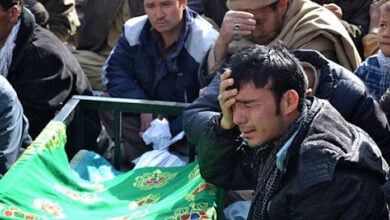
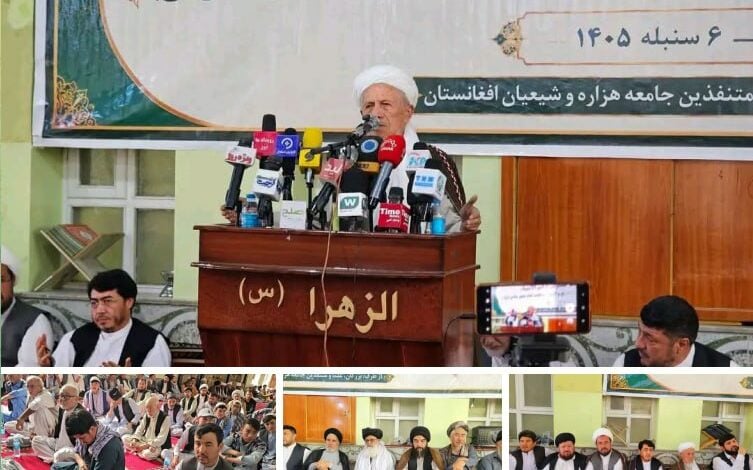
The calls were made during a gathering held at Al-Zahra Mosque in the Afghan capital, Kabul, marking the anniversary of the birth of the Noble Prophet Muhammad (peace be upon him and his family). The event was attended by religious scholars, social figures, and community elders from Afghanistan’s Shia community, as well as an official from the Taliban government.
During the gathering, Sayyid Hussein Alami Balkhi, a member of the Council of Shia Scholars of Afghanistan, criticized what he described as the authorities’ disregard for the community’s demands. He noted that an earlier statement containing the Council of Shia Scholars’ demands had been sent to the Taliban leadership in Kandahar but had yet to receive a response.
Balkhi called for recognition of and respect for Shia personal status laws, and for members of the community to be included in government structures and decision-making positions. He also called for the establishment of a dedicated committee to communicate with the authorities, follow up on Shia community issues, and work toward finding solutions.
He stressed that responding to Shia demands should not be limited to promises and statements, calling instead for practical steps to guarantee their religious and social rights.
In response, Noor-ul-Haq Anwar, head of the Affairs Department in the Taliban government, addressed some of the demands, describing the current government as “inclusive and Islamic.” Regarding land-related disputes, he said that government laws and procedures apply to everyone without discrimination between Shia and Sunni Muslims.
The gathering comes amid growing criticism from Shia figures and institutions of several measures they say affect their religious, cultural, and social activities, alongside the limited presence of Shia and Hazara communities in senior government positions and decision-making bodies.
A number of Hazara and Shia scholars and community figures have recently raised issues concerning land, religious and cultural centers, and areas inhabited by members of the community, calling on the authorities to address these concerns and ensure that the rights of residents and their institutions are protected.
Shia scholars have also previously criticized restrictions imposed on certain religious rituals and occasions, calling for guarantees of freedom to hold religious ceremonies and respect for the distinctiveness of the Ja’fari school of jurisprudence.
Participants at the Kabul gathering emphasized that five years after the Taliban’s return to power, the issues raised by the Shia community concerning political representation and religious and social rights remain unresolved. They renewed calls for the opening of direct channels of dialogue and practical responses to the community’s demands.