
“Human Rights Watch” Calls for Extension of UNIFIL’s Mandate in Lebanon to Protect Civilians
“Human Rights Watch” Calls for Extension of UNIFIL’s Mandate in Lebanon to Protect Civilians
Human Rights Watch has called on the United Nations to maintain an international peacekeeping force in southern Lebanon following the scheduled end of UNIFIL’s mandate at the end of this year, warning that its withdrawal without a strong alternative could leave millions of civilians exposed to “catastrophic” consequences.
The UN Security Council had decided in August 2025, under U.S. pressure, to terminate the UNIFIL mandate on December 31, 2026. These forces, currently comprising about 7,500 troops from 50 countries, have been stationed in southern Lebanon since 1978 to monitor the borders, yet have not prevented repeated rounds of conflict between Israel and Hezbollah.
Louis Charbonneau, the United Nations Director at Human Rights Watch, stated: “Ending UNIFIL’s mission without a strong international alternative effectively means leaving Lebanese civilians to face an uncertain fate,” emphasizing that the peacekeeping forces serve as a “critical deterrent” to attacks on civilians and human rights violations. The organization urged the United Nations to extend the mission’s mandate until the security situation improves sufficiently to consider gradually reducing the force. It stressed that the Security Council would bear significant blame if the mission’s departure leads to a security vacuum that allows for further violations.
For his part, UN Secretary-General António Guterres has expressed his support for maintaining an international force, proposing options ranging from deploying 2,000 to 5,500 personnel to monitor the ceasefire and support the Lebanese army. This proposal is expected to face opposition from the United States and Israel.
In a related context, France and Italy have expressed their desire to form a post-UNIFIL coalition aimed at strengthening Lebanon’s sovereignty and preventing it from becoming a stage for wider regional escalation. Domestically, Lebanese President Joseph Aoun has called for the UN force to remain and, if not possible, urged for a “replacement force” to assist the Lebanese army in clearing southern areas and overseeing the implementation of the “framework agreement” between Lebanon and Israel. Lebanon’s mission to the United Nations supported this direction with a letter signed by 86 member states.
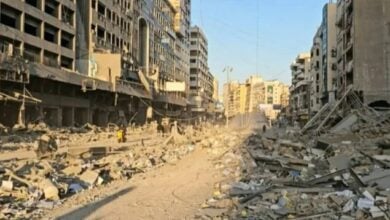
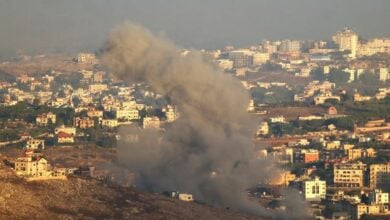
These calls come as Lebanon attempts to recover from the effects of a bloody round of violence that began in March last year, resulting in the deaths of more than 4,300 people, before military operations eased following a memorandum of understanding between Washington and Tehran and a U.S.-brokered framework agreement between Lebanon and Israel.