
India’s Supreme Court to Hear Muslim Appeals Over Disputed Kamal Maula Mosque Complex in Madhya Pradesh
India’s Supreme Court to Hear Muslim Appeals Over Disputed Kamal Maula Mosque Complex in Madhya Pradesh
—————————–
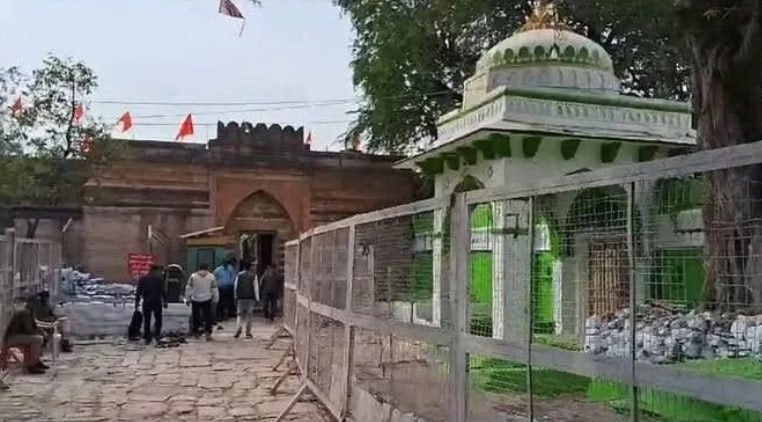
India’s Supreme Court has agreed to hear appeals filed by Muslim petitioners challenging a Madhya Pradesh High Court ruling that declared the Kamal Maula complex in Dhar district to be a temple dedicated to the Hindu goddess Saraswati, reigniting a legal and religious dispute over one of the country’s contested heritage sites.
A Supreme Court bench headed by Chief Justice Surya Kant, along with Justices Joymalya Bagchi and V. Mohana, considered urgent requests from lawyers representing the Muslim side and directed them to complete procedural requirements before the case is formally listed for further hearing.
The appeals challenge a May 15 ruling by the Madhya Pradesh High Court, which overturned an earlier arrangement by the Archaeological Survey of India (ASI) that allowed Muslims to offer Friday prayers at the site. The High Court held that the complex was the Bhojshala temple dedicated to Saraswati and that its administration falls under the authority of the central government and the ASI.
The Kamal Maula complex, an 11th-century archaeological monument protected by the ASI, has long been the subject of competing claims. Hindu groups argue that the site was historically a center of learning and a temple of Saraswati, citing Sanskrit inscriptions and archaeological evidence. Muslim groups maintain that it is the Kamal Maula Mosque, named after Sufi saint Kamaluddin Chishti, and say it was used as a mosque for centuries.
Since 2003, the ASI had implemented an arrangement allowing Hindu religious rituals on designated days while permitting Muslims to perform Friday prayers at the site. The Madhya Pradesh High Court ruling effectively ended that arrangement.
Following the decision, Muslim representatives filed appeals before the Supreme Court, while Hindu groups also submitted legal requests seeking that no final decision be taken without hearing their arguments.