
One in 17 Children Still Trapped in Child Labour Worldwide
One in 17 Children Still Trapped in Child Labour Worldwide
—————————————
Some 138 million children remain in child labour worldwide; agriculture and sub-Saharan Africa bear the heaviest burden as targets falter.
Nearly 138 million children worldwide are engaged in child labour, meaning about one in every 17 children is working in conditions that may harm their education, health or development, according to estimates by the International Labour Organization and UNICEF.
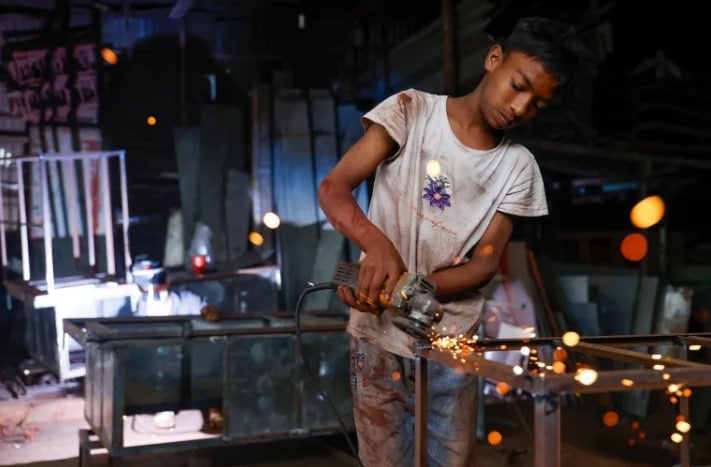
The figures, highlighted on World Day Against Child Labour, show that the world missed the United Nations target of ending child labour by 2025, despite progress over recent years. The number of children in child labour has fallen from about 160 million in 2020, but 54 million children remain in hazardous work that can expose them to dangerous machinery, toxic chemicals, heavy physical labour, long hours and unsafe environments.
Agriculture remains the largest driver of child labour, accounting for around 61 percent of all cases. That means about 84 million children are working in farming, fisheries, forests and livestock production. Many work in informal or family-based settings that are difficult to regulate.
The services sector, including domestic work, retail and hospitality, accounts for about 27 percent of cases, while 13 percent of children in child labour work in industry, including mining, manufacturing and construction.
Sub-Saharan Africa remains the global centre of the crisis, with around 87 million children in child labour — more than the rest of the world combined. Poverty, conflict, displacement, climate shocks, weak social protection and limited access to quality education continue to slow progress.
UN agencies warn that child labour often keeps children out of school and traps families in cycles of poverty. They say stronger child protection systems, expanded social support, better enforcement of labour laws and access to free, quality education are essential to reducing the number of children forced into work.