
Archaeological Discoveries at France’s Oldest Active Mosque Rewrite History of Islam’s Arrival in Mayotte
Archaeological Discoveries at France’s Oldest Active Mosque Rewrite History of Islam’s Arrival in Mayotte
———————————-
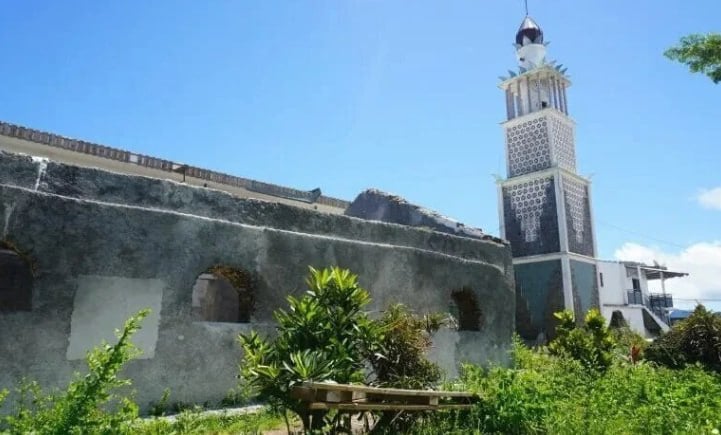
Archaeological excavations at the Tsingoni Mosque in the French Indian Ocean island of Mayotte have revealed new evidence suggesting that the roots of Islam on the island date back to the 11th and 12th centuries, several centuries earlier than the traditional account linking the spread of Islam to the rule of local sultans in the 16th century.
Located on Mayotte’s western coast, Tsingoni Mosque is considered the oldest mosque in French territory that remains in active use today. Its successive architectural layers provide a historical record of centuries of cultural and commercial exchange across the Indian Ocean.
The excavations were carried out in 2023 by France’s National Institute for Preventive Archaeological Research (Inrap) as part of a restoration project. The mosque was listed as a French historical monument in 2015. Researchers found evidence of settlement at the site dating to the 12th century, while the remains of a stone mosque built from sandstone, basalt and coral were dated to the 14th century.
The findings challenge the long-held belief that Islam arrived in Mayotte primarily through the sultans who established Tsingoni as their capital in the 16th century. Historians now suggest that Islam gradually reached the island earlier through Indian Ocean maritime trade networks, with merchants and sailors from regions such as Oman and possibly Iran contributing to its spread.
The mosque underwent major expansion during the 16th century as the local sultanate grew in influence. A historic mihrab bearing the name of Sultan Ali Muhammad was added in 1538. Archaeological evidence also indicates that Muslims in the region followed the Shafi‘i school of Islamic jurisprudence.
Among the discoveries made during the excavations was a Quranic page hidden inside one of the mosque’s walls alongside a wooden construction nail, likely placed there during an earlier renovation. Researchers said the discovery reflects the interaction between local traditions and Islamic cultural practices.