
25th of Dhu al‑Qiʿdah — Dahw al‑Ardh: Anniversary of First Descent of Divine Mercy
25th of Dhu al‑Qiʿdah — Dahw al‑Ardh: Anniversary of First Descent of Divine Mercy
———————————————
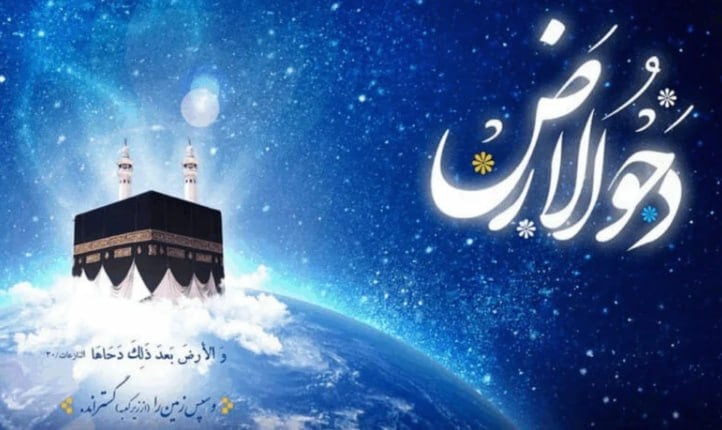
The Day of Dahw al‑Ardh (“the spreading of the earth”), observed on the 25th of the lunar month of Dhu al‑Qiʿdah, is traditionally understood in Islamic belief as the day when Allah the Almighty made the earth habitable by spreading it out after it had been covered entirely by water.
According to Shia narrations, the first dry land to appear from the water was the location of the Holy Kaʿbah in Makkah, making it the initial center of human habitation and divine mercy on Earth. From that point, the land continued to spread and form the dry continents visible today. As one report notes, “the land rose above the water… beginning from the Kaʿbah”.
In Shia tradition, this day carries deep spiritual significance and is associated with divine mercy being first revealed to the world. Religious sources emphasize that acts of devotion on this day — including fasting, prayer, purification (ghusl), supplication, and remembrance — are especially meritorious. Some narrations relate that fasting on this day is rewarded as if one has fasted for seventy years, and worship performed on its night and day yields expansive spiritual blessings.
Beyond the event of Dahw al‑Ardh, other important occurrences are linked to this date in Islamic tradition; including the births of Prophets Abraham and Jesus (peace be upon them), departure of Prophet Muhammad’s (peace be upon him and his family) from Madinah towards Mecca to perform Ḥajjat al‑Wadāʿ, accompanied by Lady Fatima and the Prophet’s household. In certain traditions attributed to the Imams of Ahl al‑Bayt (peace be upon them), this day is also associated with the future rise of Imam al‑Mahdi (peace be upon him).
Shia scholars emphasize that Dahw al‑Ardh is not merely a historical event but a reminder of God’s mercy and the origin of human habitation, inviting believers to reflect on the blessings of creation, to engage in worship and repentance, and to express gratitude for the earth’s resources.