
Najaf and Karbala in Mourning: Commemorating Martyrdom of Imam Muhammad al‑Jawad
Najaf and Karbala in Mourning: Commemorating Martyrdom of Imam Muhammad al‑Jawad
——————————————-
The Shia world observes a solemn period of mourning as Imam Muhammad al‑Jawad (peace be upon him), the ninth Imam of the Twelver Shia, is commemorated on his martyrdom anniversary.
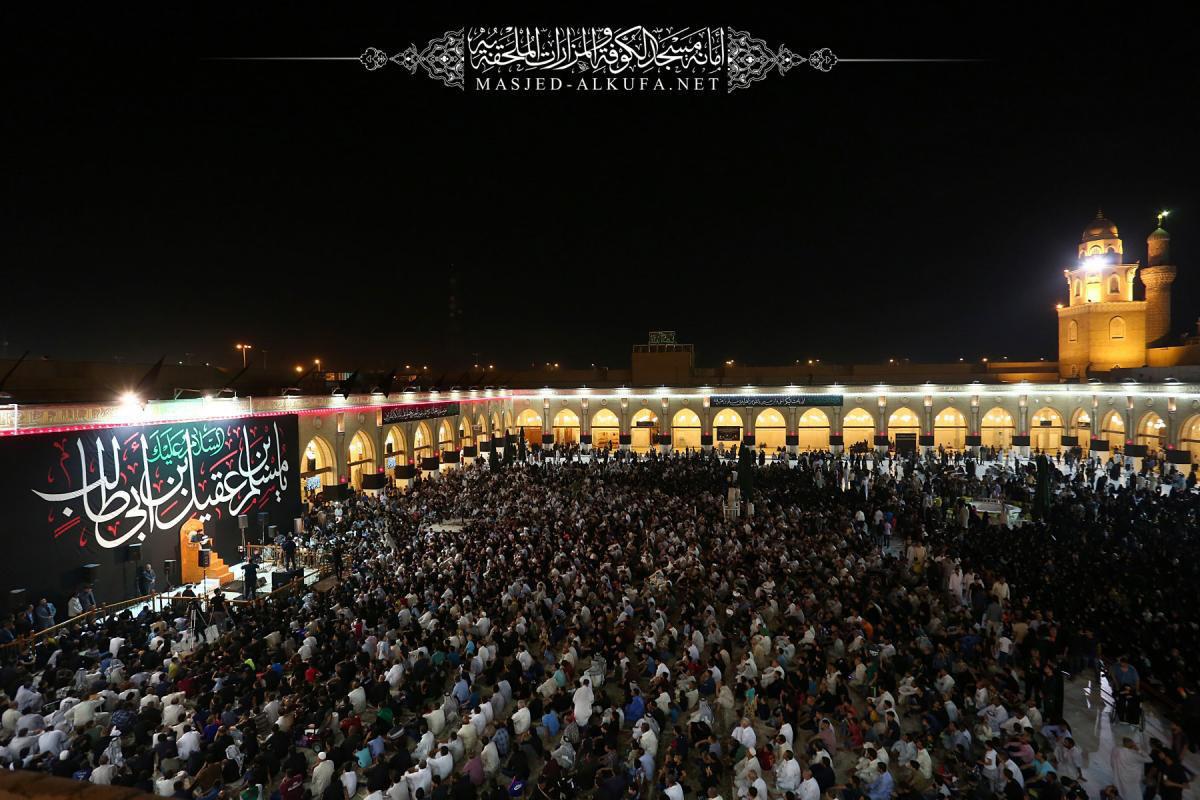
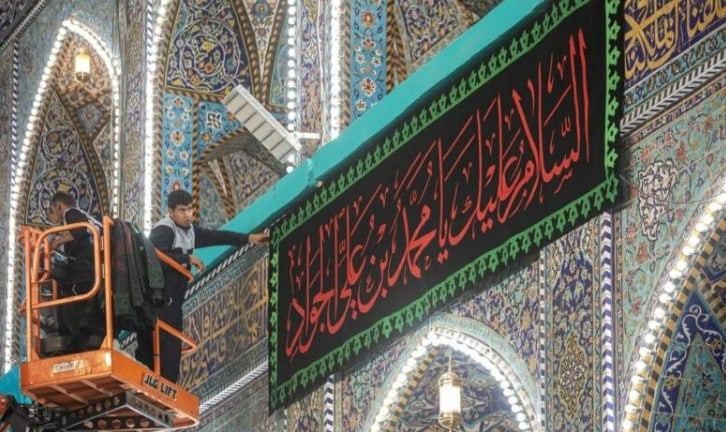
In Najaf, the sacred precincts of Imam Ali’s (peace be upon him) shrine have been draped in black, with banners and mourning flags erected by shrine custodians to prepare for thousands of pilgrims arriving to pay respects. Karbala’s holy sites, including the shrine of Imam Hussein (peace be upon him), have similarly been adorned with black flags and ceremonial banners, reflecting communal grief and devotion.
Security and logistics have been tightly coordinated by the Iraqi Interior Ministry. Minister Abdul Amir al‑Shammari reviewed final plans to ensure safe pilgrim movement, directing comprehensive security measures, crowd management, and the deployment of civil, military, and volunteer units. A ban on armed displays during the commemoration has been enforced to preserve the solemn and peaceful atmosphere. Baghdad’s municipal authorities have completed preparations for traffic management, street services, sanitation, and emergency support to accommodate the large influx of visitors.
Imam al-Jawad (peace be upon him), despite his young age, is remembered for his profound knowledge debates. He succeeded his father, Imam Ali al‑Reza (peace be upon him), at the age of seven and continued the spiritual leadership of the Shia community until his martyrdom in Baghdad in 835 CE. Buried alongside his grandfather, Imam Musa al‑Kadhim (peace be upon him) in Kadhimiya, his life and martyrdom remain central to Shia identity, as he maintained the true faith by steering the Shia community from deviations.
Pilgrims and mourners are traveling towards Kadhimiyya to honour this anniversary, and hold gatherings of recitation of Ziyarat Ashura, lectures on the Imam’s life, and chest-beating ceremonies. Shrine authorities have also conducted ritual cleaning of sacred domes and organized logistical arrangements for food, rest areas, and health services.