
A historic manuscript dating back centuries, preserved in Málaga, documents an aspect of Islamic heritage in Spain.
A historic manuscript dating back centuries, preserved in Málaga, documents an aspect of Islamic heritage in Spain.
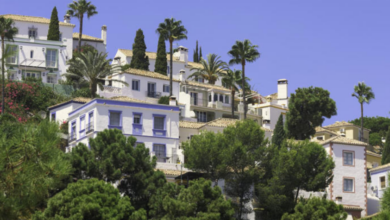
The Spanish province of Málaga holds a rare copy of the Holy Quran, dating back centuries, as part of a collection of Islamic manuscripts discovered hidden behind a wall of an old house in the village of Cútar in 2003. This collection serves as a historical testament to the Islamic presence in Al-Andalus. Known as the “Cútar Manuscripts,” the collection consists of the revered Quran and two other books, which remained concealed for over five centuries before being discovered by chance during the renovation of a house in the village on June 28, 2003.
Historical information indicates that the jurist and Imam Muhammad Al-Shiar concealed the books around the year 1500 AD, during a period of significant changes following the fall of Granada and the end of Islamic rule in Al-Andalus, before leaving the region.
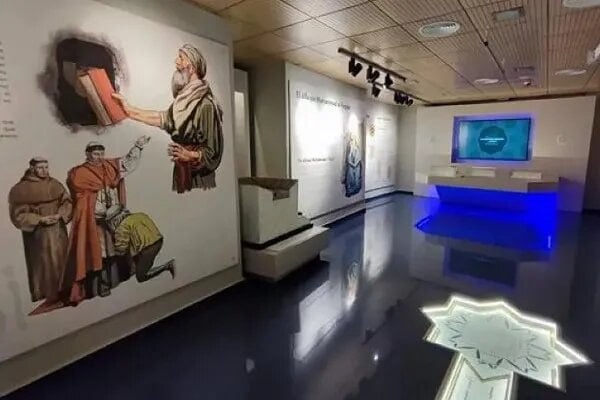
The manuscripts were later subjected to restoration and preservation efforts and were deposited in the regional historical archive of the province of Málaga, while copies of them were displayed to introduce this historical and cultural legacy. The Quran is distinguished by its square shape and multi-colored ink writing, and it is considered one of the rare historical Quranic copies preserved in Spain, despite the loss of several of its last pages.
The other two books contain diverse materials related to the life and work of Al-Shiar as a jurist, including examples of documents, certificates, issues on inheritance, marriage, mathematics, and traditions, as well as religious texts, sermons, hadiths, poems, and information reflecting aspects of community life at the time.
The “Cútar Manuscripts” hold special significance for the insight they provide into the religious and social life of Muslims in Spain during a historically transformative period, as well as their value in preserving an aspect of Quranic and Islamic heritage in the Iberian Peninsula.