
UN Talks Highlight International Divisions Over Lethal Autonomous Weapons
UN Talks Highlight International Divisions Over Lethal Autonomous Weapons
————————————————–
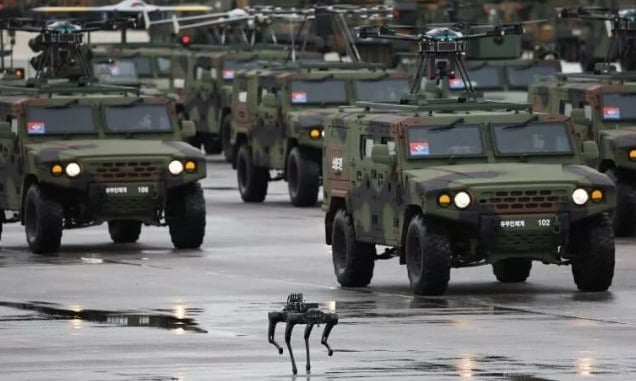
The United Nations is preparing to hold international talks in Geneva, Switzerland, next week, with representatives from 128 countries expected to discuss legally binding restrictions on lethal autonomous weapons, commonly known as “killer robots.”
These weapons use artificial intelligence to identify, select and attack targets without direct human intervention, raising serious ethical, humanitarian and legal concerns.
The International Committee of the Red Cross (ICRC) has warned of growing risks associated with the rapid development of artificial intelligence in warfare, calling for clear legal safeguards to maintain meaningful human control over life-and-death military decisions. Human Rights Watch has also cautioned against relying on error-prone technologies to determine who lives and who dies on the battlefield. The international campaign Stop Killer Robots, which brings together more than 300 organizations, has been demanding legally binding restrictions since 2013.
Diplomatic efforts to regulate these weapons have gained momentum. In September, Brazil and Algeria led a declaration supported by 47 countries calling for legal restrictions, while 50 states later emphasized the need for human oversight. On October 29, the UN General Assembly adopted a resolution supported by 163 countries calling for discussions on regulating autonomous weapons. The United States, Russia, Israel, North Korea and Belarus voted against it, while nine countries, including China, Iran and Saudi Arabia, abstained.
However, countries remain divided over the proposed agreement. The United States has suggested a five-year process to develop a legally non-binding framework, while human rights organizations and the ICRC are calling for negotiations to be completed within one year. The ICRC is also demanding a ban on weapons whose effects cannot be adequately predicted or controlled, as well as systems designed or used to directly target humans without human intervention.
UN officials have warned that allowing machines to make decisions about taking human lives raises unacceptable ethical concerns. With consensus among major powers remaining uncertain, non-governmental organizations are considering moving negotiations to the UN General Assembly, where decisions can be adopted by a majority vote rather than requiring unanimous agreement.