
Rare Quranic Manuscripts Preserved in Libraries Around the World
Rare Quranic Manuscripts Preserved in Libraries Around the World
—————————-
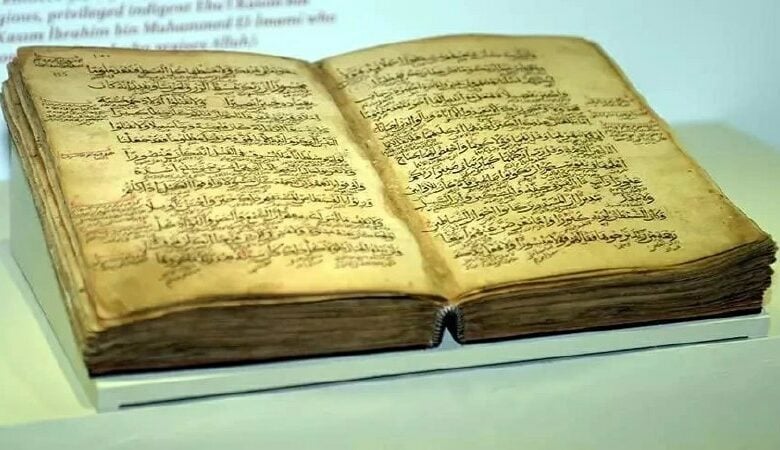
Libraries and cultural centers worldwide hold some of the oldest Islamic manuscripts, including rare copies of the Quran dating back to the early centuries of Islam. These manuscripts serve as important historical sources documenting the initial compilation of the Quran and the development of early Arabic scripts.
Among the most notable is the Birmingham Quran manuscript, housed at University of Birmingham in the United Kingdom. Written on parchment in the Hijazi script, radiocarbon tests indicate the manuscript dates back approximately 1,370 years, likely produced between 568 and 645 CE, around the lifetime of the Prophet Muhammad or shortly after. The manuscript contains parts of Surahs Al-Kahf and Taha, making it one of the earliest known Quranic texts.
In Egypt, cultural centers preserve an early Quran written on gazelle skin, now kept at the Egyptian Islamic Cultural Center after being moved from the National Library and Archives. This manuscript represents one of the earliest examples of Kufic script, and historians believe it may be one of the two copies referenced by the medieval historian Al-Maqrizi.
The Sana’a manuscripts are another key collection, dating to the late 7th and early 8th centuries. Around 4,500 manuscripts were discovered, mostly at the Great Mosque of Sana’a, with some preserved in libraries and research centers internationally.
Additionally, the Samarqand Quran, also known as the Tashkent Quran, is held at the Hast Imam Library. This historic manuscript, along with other early Quranic texts, provides crucial insight into the history of Quranic writing and the evolution of Arabic calligraphy in the early Islamic centuries.