
Myanmar: Report Warns of Worsening Humanitarian Crisis for Up to 600,000 Displaced People in Rakhine State
Myanmar: Report Warns of Worsening Humanitarian Crisis for Up to 600,000 Displaced People in Rakhine State
———————————————
A new research report has warned of deteriorating humanitarian conditions in Myanmar’s western Rakhine State, where between 500,000 and 600,000 internally displaced people are facing severe living conditions amid ongoing military operations, declining humanitarian assistance and shortages of food, clean water, healthcare and education.
According to Development Media Group in a report published on November 10, 2026, a study released by the Arakan Studies Center on November 6 documented a worsening situation among displaced communities between January and October this year. The estimated figures cover areas under the control of the United League of Arakan, the political wing of the Arakan Army, and include members of various communities, among them the Muslim Rohingya minority. The estimates have not been independently verified.
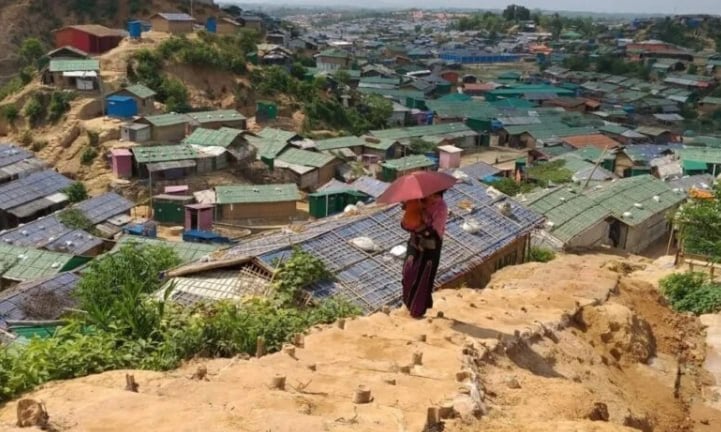
The study found that thousands of displaced families are living in temporary camps, schools, monasteries and other locations lacking basic necessities after fleeing their homes because of ongoing clashes and military operations. Airstrikes, artillery shelling and landmines remain major threats to civilians, preventing many families from returning to their places of origin even in areas where fighting has subsided.
In Kyaukphyu, the number of displaced people reportedly reached approximately 50,000 in May, with residents facing severe shortages of drinking water, food, medicine and adequate shelter. Meanwhile, around 2,000 displaced people at the Kyan Thalin camp in Ponnagyun Township have struggled to access clean water and employment opportunities.
The report also highlighted deteriorating sanitation conditions in a displacement camp in Mrauk-U, where flooding rendered 10 of the 14 toilets unusable, raising concerns about disease outbreaks and growing health risks among residents.
The humanitarian crisis has also disrupted education, forcing children to abandon their studies because of displacement and security concerns, while other families are unable to afford educational expenses. Access to healthcare has likewise declined, particularly for children and older people.
According to the study, the loss of agricultural land and livelihoods, combined with rising prices of essential goods, has increased displaced families’ dependence on humanitarian assistance at a time when relief organisations are struggling to meet growing needs.