
Indonesia’s Free Meals Programme Faces Corruption Allegations, Mismanagement Concerns
Indonesia’s Free Meals Programme Faces Corruption Allegations, Mismanagement Concerns
———————————————————
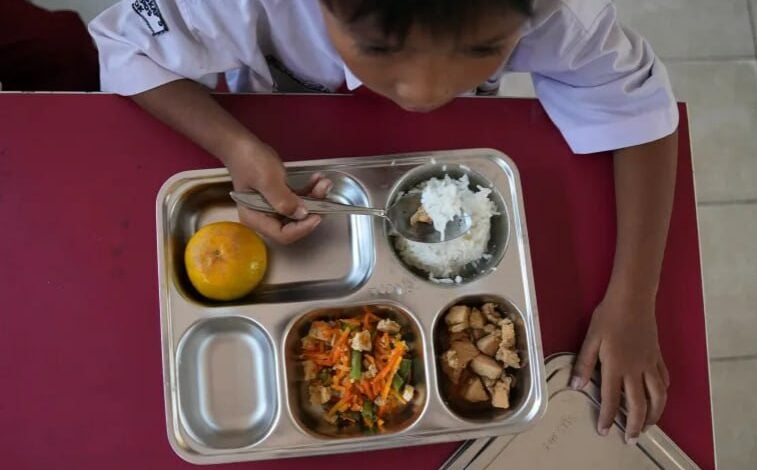
Indonesia’s flagship free meals programme, launched by President Prabowo Subianto to reduce child stunting and improve nutrition, is facing growing scrutiny over alleged corruption, waste, food poisoning cases, and poor targeting of resources.
More details in the following report:
Indonesia’s “Free Nutritious Meals” programme is facing mounting criticism amid allegations of corruption, mismanagement, and waste in one of the country’s largest social initiatives.
Launched in 2025 by President Prabowo Subianto, the programme aims to address child stunting, improve students’ focus in school, and support local economies. It has rolled out nearly 28,000 kitchens over the past 18 months, with each facility supplying up to 3,000 meals per day to schools and communities.
However, the initiative has come under global scrutiny after authorities arrested the head of Indonesia’s National Nutrition Agency and two deputies in early June over alleged procurement fraud worth $56 million. Investigations have since expanded to seven people, including an active-duty police officer and a military officer.
Critics say the programme has become too large to manage effectively. Analysts warn that its nationwide scale, franchise-style kitchen system, and broad regional implementation have created multiple opportunities for financial leakage.
The government spent $2.8 billion to launch the programme in 2025, but later cut this year’s budget from $18.4 billion to $14.7 billion after President Prabowo ordered funds to be used more efficiently.
Concerns have also grown over the distribution of resources. Reports indicate that more than 18,000 kitchens are located on Java, Indonesia’s wealthiest and most populous island, while Papua, where stunting rates are among the highest, has far fewer facilities. Civil society groups say the poorest and most isolated areas are receiving the weakest support.
The programme has also been affected by food safety problems, with thousands of food poisoning cases reported. According to the Indonesian Education Monitoring Network, the number of cases reached 33,000 by April 2026.
Officials have acknowledged problems in the rollout. Coordinating Minister for Food Zulkifli Hasan said the programme had nearly 7,000 surplus kitchens, costing the state about one trillion rupiah per month in incentive fees. He also alleged that operating permits may have been bought and sold by some operators.
Education and economic experts have urged the government to use existing school canteens instead of building new kitchens, arguing that this could reduce costs and improve efficiency.
In response to criticism, the National Nutrition Agency has said it will prepare a special scheme targeting mothers and toddlers in underdeveloped, frontier, and outermost regions. The government is also considering further budget cuts and changes to the incentive system.