
Controversy Erupts Over Hijab Ban at College in Mumbai, Sparking Outrage Among Muslim Pupils
Controversy Erupts Over Hijab Ban at College in Mumbai, Sparking Outrage Among Muslim Pupils
——————————–
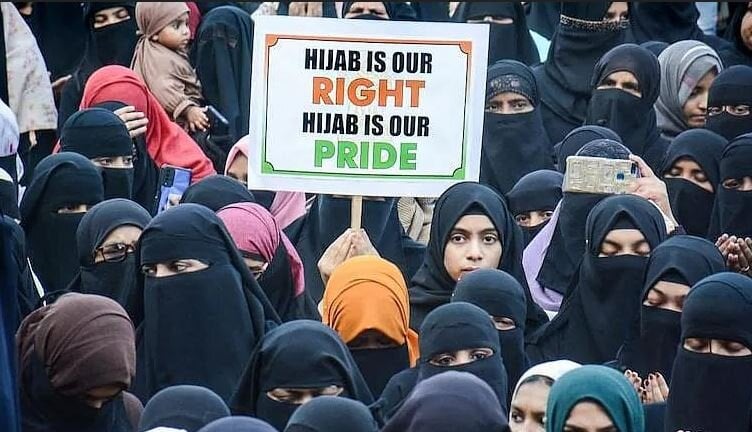
Muslims are up in arms against Vivek Vidyalaya and Junior College in the Goregaon suburb of Mumbai after the institution banned students from wearing a burqa on the institution’s campus, claiming that the rule violates the Indian Constitution’s guarantee of religious equality, as reported by AhlulBayt News Agency (ABNA).
The college claims the move is part of their uniform policy and anti-cheating measure, citing an incident last year where a burqa-clad student was caught cheating. The administration said the ban was meant to maintain discipline and prevent malpractices.
The Students Islamic Organisation (SIO) on Thursday criticised the rule calling the ban discriminatory, saying it targets Muslim students and forces them to ditch their religious attire. The SIO argues this violates Articles 14, 15, and 25 of the Indian Constitution, which guarantee equality and religious freedom.
The student body said the policy mandates that Muslim students remove their religious attire before entering the class, while allowing hijabs, under the guise of prohibiting clothing that reveals religion or shows cultural disparity.
Burqas are full-length garments that fully cover the face, leaving a mesh screen for vision. A hijab covers the hair, ears and neck, while leaving the face uncovered. It is not clear whether the college has banned only burqas and has allowed hijabs.
“The college’s policy reeks of targeted Islamophobia, eroding inclusivity in our classrooms,” SIO said, demanding the immediate repeal of the rule and the intervention of the Maharashtra education department to protect religious freedom.
Affected students are planning to take drastic action, including hunger strikes, if the ban isn’t revoked. The issue has sparked concerns about Islamophobia and erosion of inclusivity in education.
Goregaon police, under whose jurisdiction the college is located, said that no FIR has been filed in the case.
India has witnessed several similar disputes over religious attire in educational institutions in recent years, most notably the Karnataka hijab controversy of 2021–2022, in which government-run colleges in Udupi and other districts barred Muslim students from wearing the hijab, prompting nationwide protests and a landmark Karnataka High Court ruling that upheld the ban before the Supreme Court later delivered a split verdict. Comparable incidents have occurred elsewhere, including colleges in Maharashtra, Hyderabad, and Uttar Pradesh, where restrictions on burqas, niqabs or hijabs were introduced on grounds of uniform policy, discipline or anti-cheating measures, sparking accusations of discrimination from Muslim organisations and civil-rights groups.
Human-rights bodies such as Amnesty International and the Indian Muslim Women’s Movement have repeatedly warned that such dress-code bans disproportionately affect Muslim girls and restrict their access to education, forming a broader pattern of attire-related disputes in Indian schools and colleges.