

World Population Day: Global Population Reaches 8.3 Billion Amid Calls to Strengthen Sustainable Development
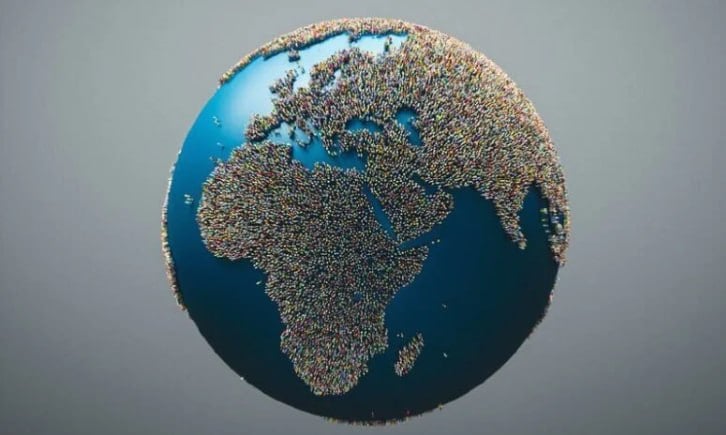
World Population Day: Global Population Reaches 8.3 Billion Amid Calls to Strengthen Sustainable Development
———————————
The world marked World Population Day on July 11 as the global population reaches around 8.3 billion people as of July 1, 2026, amid UN calls to continue efforts toward sustainable development and respond to growing demographic challenges.
This year’s commemoration is held under the theme “Achieving the Hopes and Aspirations of Youth: Today and for the Future,” highlighting the importance of empowering young people and expanding their opportunities in education, health, and employment.
According to estimates from the United Nations Population Division’s 2024 revision, around 1.3 billion people live in more developed countries, while nearly 7 billion live in less developed countries. India and China remain the world’s most populous countries, together accounting for about 35 percent of the global population. Egypt ranks 13th globally, third in Africa, and first in the Arab world by population.
Projections indicate that the global population will rise to 8.9 billion by 2035 and 9.7 billion by 2050, with India expected to remain the most populous country, followed by China.
Global population growth stood at 0.83 percent in 2026, with significant differences between countries. Some countries, including China, Spain, and Finland, recorded negative growth rates, while others, such as Somalia and Niger, continued to record high growth.
The global fertility rate reached 2.23 children per woman, while average life expectancy at birth stood at 71 years for males and 76 years for females, amid continuing health and development gaps between developed and developing countries.