
Malaysia: More Than 126,000 Rohingya Refugees Face Restrictions on Work, Education Amid Lack of Legal Recognition
Malaysia: More Than 126,000 Rohingya Refugees Face Restrictions on Work, Education Amid Lack of Legal Recognition
—————————————–
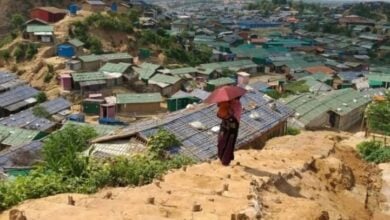
More than 126,000 Muslim Rohingya refugees in Malaysia are facing growing humanitarian and legal challenges, including limited access to employment, education and healthcare, as well as the absence of official refugee status, years after fleeing persecution and violence in Myanmar.
An investigation published by the Associated Press on November 6, 2026, highlighted the continuing difficulties facing Rohingya refugees in Malaysia, where many remain in legal and social uncertainty, leaving them vulnerable to detention and preventing them from building stable lives.
According to data from the United Nations High Commissioner for Refugees (UNHCR), approximately 126,000 registered Rohingya refugees are living in Malaysia, out of more than 215,000 refugees and asylum seekers of different nationalities, based on figures from early 2026.
The report noted that Malaysia is not a signatory to the 1951 United Nations Refugee Convention and lacks a comprehensive legal framework for recognising refugees. Consequently, UNHCR registration does not automatically grant refugees legal residency or official permission to work.
These restrictions have significant consequences for daily life. Many Rohingya refugees are forced to seek employment in the informal economy, while their children face difficulties accessing public schools. Families also encounter financial and administrative obstacles when attempting to obtain healthcare services.
The investigation further highlighted challenges relating to religious practice and social belonging. Citing Christian Solidarity Worldwide, it reported difficulties in officially registering places of worship for Rohingya communities, alongside accounts of discriminatory treatment experienced by some refugees in local mosques.
However, the report also pointed to expressions of solidarity and support from Malaysian religious and community figures, stressing that the discriminatory experiences described by some refugees should not be interpreted as reflecting the attitudes of Malaysian society as a whole.
The roots of the crisis lie in the persecution and violence suffered by Myanmar’s Muslim Rohingya minority, particularly during the military operations of 2017, which forced hundreds of thousands to flee to Bangladesh and other countries in search of safety and protection.
Although Malaysia has provided refuge to many people escaping violence, the absence of secure legal status continues to obstruct their integration into society, leaving thousands of families facing an uncertain future while the humanitarian crisis in their homeland remains unresolved.