

Egyptian Study Examines How Funding Networks, Media Institutions, Political Groups Contribute to Spread of Islamophobia in West
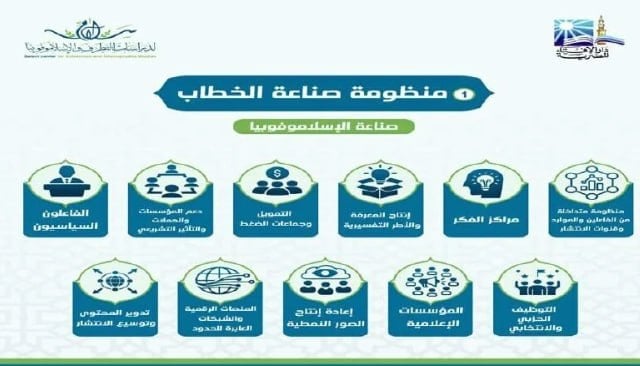
Egyptian Study Examines How Funding Networks, Media Institutions, Political Groups Contribute to Spread of Islamophobia in West
———————————————
A recent study by the Salam Center for Studies on Extremism and Islamophobia, affiliated with Egypt’s Dar Al-Ifta, has highlighted the role of funding networks, think tanks, lobbying groups, and media institutions in producing and spreading anti-Islam and anti-Muslim narratives across Western societies.
The study, titled “The Manufacturing of Islamophobia in the West: Actors, Networks, and Mechanisms for Producing and Reproducing Anti-Muslim Discourse,” examines the institutional, political, and media mechanisms that contribute to spreading negative stereotypes about Muslims and transforming them into tools for influencing public opinion and public policy.
According to the study, Islamophobia extends beyond individual prejudice and personal attitudes, involving broader networks of institutions and influential actors that produce, promote, and circulate anti-Muslim narratives. It notes that certain think tanks contribute to portraying Islam and Islamic law negatively through research and security-related frameworks, giving such narratives greater visibility in political and media debates.
The research also examines the role of funding institutions and lobbying groups in supporting media campaigns and legislative initiatives targeting Muslims, as well as the use of anti-Muslim rhetoric by certain right-wing political parties as a tool in political and electoral competition.
Furthermore, the study highlights how traditional media outlets and digital platforms contribute to reproducing negative stereotypes about Muslims and circulating hostile narratives across national borders, facilitating the spread of extremist ideas associated with hostility towards Islam.
However, the researchers cautioned that similarities in rhetoric and institutional relationships do not necessarily demonstrate the existence of a unified central leadership or direct coordination among the different actors involved.
The Salam Center concluded by calling for the development of scientific tools to monitor Islamophobia, greater transparency in tracing funding sources and institutional relationships, and a clear distinction between legitimate criticism of Islam and discriminatory attitudes directed against Muslims. It emphasized that addressing the phenomenon requires reliable research, systematic monitoring, and a comprehensive understanding of the networks and mechanisms through which anti-Muslim discourse is produced and disseminated.