
Pro-Taliban Cleric Challenges Ban on Women’s Medical Education in Afghanistan, Citing Hanafi Jurisprudence
Pro-Taliban Cleric Challenges Ban on Women’s Medical Education in Afghanistan, Citing Hanafi Jurisprudence
—————————————–
An Afghan religious scholar has questioned the Taliban’s ban on women’s medical education, arguing that training female doctors and midwives can constitute a collective religious obligation under Hanafi Islamic jurisprudence.
Mufti Hedayatullah Hikmat, a cleric from Kandahar described as supportive of the Taliban, has presented nine legal arguments challenging religious justifications for prohibiting women from studying medicine. In a detailed statement in Pashto published on X, he cited classical Hanafi sources, including Radd al-Muhtar, Al-Mabsut and Al-Binaya Sharh al-Hidaya.
Hikmat argued that medicine can constitute a collective religious obligation, meaning that society must ensure sufficient qualified professionals are available. He maintained that when female patients require women doctors and midwives, providing women with opportunities to acquire medical training becomes part of fulfilling this obligation.
He also distinguished between allowing male doctors to treat women in medical emergencies and the long-term responsibility to train female medical professionals. According to his interpretation, exceptional permission for male doctors to provide treatment when no female doctor is available cannot justify permanently preventing women from studying medicine.
Drawing on classical Hanafi texts, Hikmat further argued that teaching women medical skills is permissible and that modern universities and medical institutes can serve as legitimate means of fulfilling religious responsibilities. He also maintained that differences among Hanafi scholars regarding women’s permission to leave home for professional activities do not establish a general prohibition on medical education.
Hikmat called on governing authorities to consider public welfare, arguing that preventing women from becoming qualified healthcare professionals could obstruct the fulfillment of a collective religious obligation. He added that medical education could be organized in accordance with Islamic requirements concerning dress and interactions between men and women.
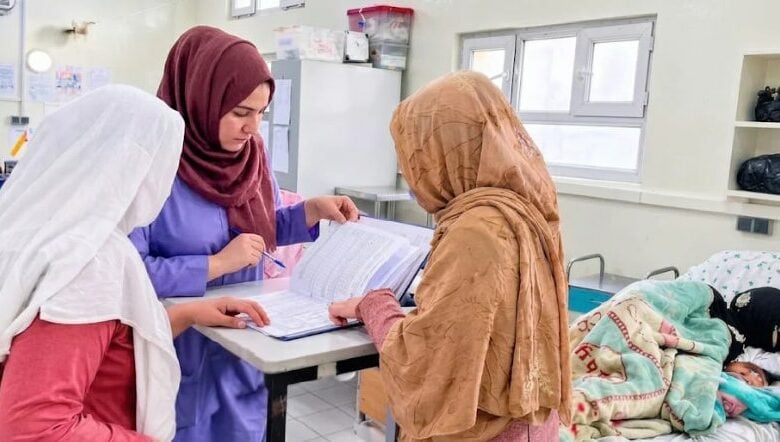
The intervention comes after the Taliban banned women and girls from attending medical institutes in December 2024, following earlier restrictions on girls’ secondary education and women’s university attendance. The decision further limited women’s access to formal education and raised concerns about the future availability of female healthcare workers in Afghanistan.