
Kuwait Death Sentences Against Shiite Cleric, Two Others Raise Human Rights Concerns
Kuwait Death Sentences Against Shiite Cleric, Two Others Raise Human Rights Concerns
————————————-
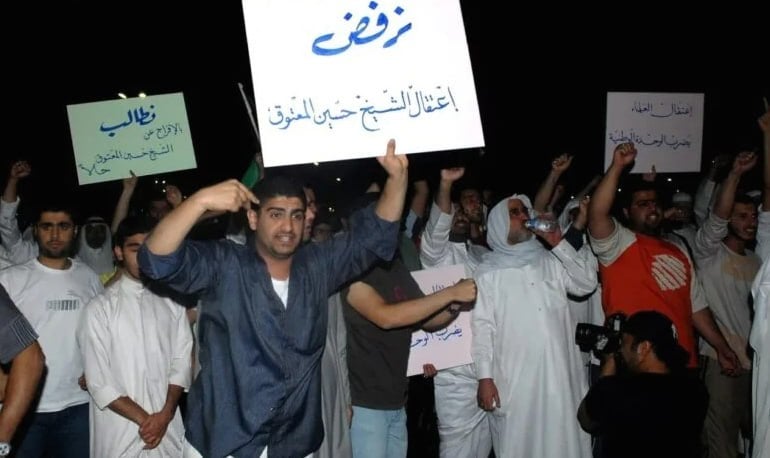
A Kuwaiti criminal court has sentenced three men to death, including prominent Shiite cleric Sheikh Hussein Abdullah al-Mutawa, in a case involving allegations of espionage for Iran, affiliation with Lebanon’s Hezbollah, and plotting to assassinate Kuwait’s Interior Minister Fahad Al-Yousef. The verdicts have raised concerns among rights advocates and community figures over due process, civil liberties, and the potential impact of security measures on relations between Kuwait’s Sunni and Shiite communities.
The Criminal Court issued the death sentences on Monday against al-Mutawa, Hassan Abdulhadi Hajieh, and Iranian national Abdulreza Haidar Dehqani. Eight other defendants received five-year prison sentences in the same case, which also involved allegations of planning attacks against government figures. The rulings come amid heightened regional tensions and the US-Israeli war with Iran, following announcements by Kuwaiti authorities that they had dismantled networks allegedly linked to Hezbollah and suspected of planning attacks on facilities and individuals inside the country.
Al-Mutawa, who previously served as secretary-general of the National Islamic Alliance, studied religious sciences in the Iranian city of Qom before establishing the Imam Hassan al-Mujtaba religious seminary in Kuwait. Mohammed Al-Matar, director of the Jusoor Center for Studies, warned that the latest developments could deepen perceptions among Shiite citizens that they are being targeted, potentially damaging social relations between Sunnis and Shiites. He said Kuwait had worked since 1991 to rebuild relations between the two communities following tensions during the 1980s, and cautioned that prosecutions involving religious and political figures and businesspeople could undermine coexistence if perceived as targeting a particular sect.
Al-Matar also noted that al-Mutawa had previously undertaken political and regional mediation efforts, including involvement in mediation initiatives during Bahrain’s 2011 protests at the request of Kuwait’s late Emir, Sheikh Sabah Al-Ahmad. His regional relationships with political and religious figures had enabled him to participate in those efforts, Al-Matar said.
Human rights concerns have also been raised over Kuwait’s counterterrorism legislation. In August 2026, Amnesty International criticized new laws, warning that broad definitions of certain offenses could threaten freedom of expression, peaceful assembly and association, while expanding the range of crimes punishable by death.
Yahya Al-Hadid, head of the Gulf Institute for Democracy and Human Rights, warned against the possible politicization of security cases amid regional tensions. He said associating Shiite citizens with developments involving Iran could undermine equal citizenship and restrict public freedoms. Al-Hadid called for defendants to have access to legal counsel, for investigators to verify the integrity of investigative procedures and the circumstances in which confessions were obtained, and for authorities to uphold safeguards established under international human rights instruments.
Kuwaiti lawyer Saud Al-Subaie, a former adviser to the speaker of the National Assembly, stressed that the Criminal Court’s rulings were not final and could be appealed. The Court of Appeal may uphold, amend or overturn the judgments based on the evidence, facts and legal interpretation, he said. Al-Subaie added that the full text and reasoning of the judgments must be examined to determine which legal provisions were applied to each defendant and to distinguish the prosecution’s allegations from the facts the court found to have been established.