

Switzerland: Muslims Make Up Around 6% of Population as Religious and Social Presence Grows
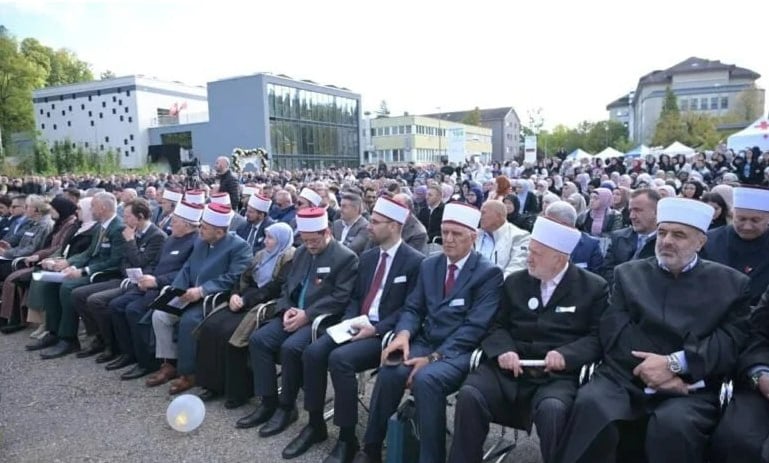
Switzerland: Muslims Make Up Around 6% of Population as Religious and Social Presence Grows
————————————————
Muslims accounted for approximately 6% of Switzerland’s population covered by religious statistics in 2024, according to data from the Swiss Federal Statistical Office. The figures highlight the growing presence of the Muslim community in the country, amid ongoing debates over religious freedom, the legal recognition of Islamic institutions, and efforts to combat religious discrimination.
Historical and academic research indicates that Switzerland’s Muslim population has expanded significantly over recent decades, driven by labor migration, the arrival of refugees and asylum seekers, and the emergence of new generations of Muslims born or raised in Swiss society.
According to the Historical Dictionary of Switzerland, the number of Muslims in the country rose from 16,353 in 1970 to 56,625 in 1980. The figure exceeded 152,000 in 1990 before reaching more than 320,000 in the 2000 census. At that time, Swiss Muslims traced their origins to 105 different countries.
Historical data show that approximately 58% of Muslims in Switzerland in 2000 came from countries of the former Yugoslavia, particularly Kosovo, North Macedonia, and Bosnia and Herzegovina. People of Turkish origin accounted for around 21%, while other communities represented a wide range of ethnic and cultural backgrounds.
This diversity has helped shape the development of Islamic institutions and associations across the country. These organizations have adapted to the religious, linguistic, and cultural needs of Muslim communities, with growing attention to Islamic education, places of worship, and burial facilities that accommodate Islamic practices.
According to the Historical Dictionary of Switzerland, some historical contacts between Muslims and territories that now form Switzerland date back to the 10th century. However, these references do not establish the existence of an organized Muslim community in the region during that period.
In the modern era, the establishment of Islamic institutions accompanied the expansion of the Muslim population. The Mahmud Mosque in Zurich opened in 1963, followed by another mosque in Geneva in 1978, reflecting the growing demand for religious and community facilities.
In 2006, the Federation of Islamic Organizations in Switzerland was established to strengthen coordination among Islamic associations and represent some of their interests before official institutions. Despite these efforts, the Muslim community remains diverse in its religious, cultural, and organizational affiliations.
Article 15 of the Swiss Federal Constitution guarantees freedom of religion and conscience. These protections include the right to choose one’s beliefs, practice religious rites, join religious communities, and participate in religious education.
However, relations between the state and religious institutions are governed largely at the cantonal level. As a result, the conditions for the legal recognition of Muslim organizations vary across Switzerland’s cantons, according to the Institute of Law and Religion at the University of Fribourg.
Despite constitutional protections, Islam’s place in public life remains a subject of political and social debate. In 2009, a nationwide referendum resulted in a ban on the construction of new minarets. Research and public discussion have also continued to focus on racism and discrimination against Muslims.