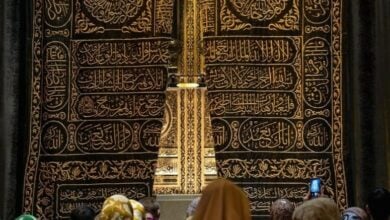

Malaysia’s Islamic Arts Museum showcases rare Qur’ans, manuscripts from across Islamic world
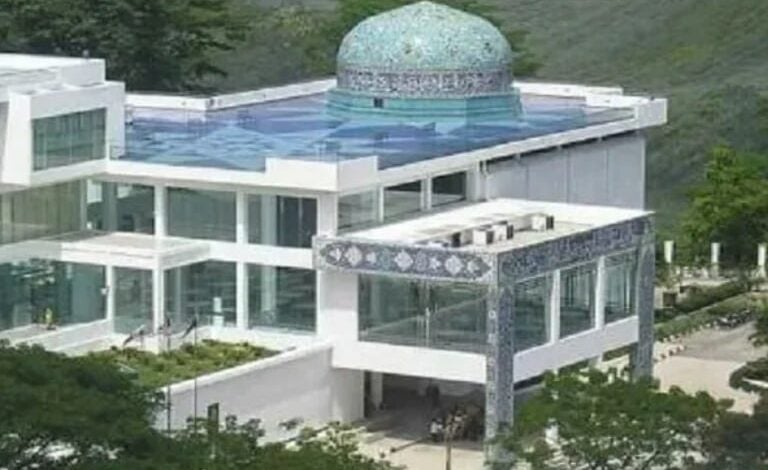
Malaysia’s Islamic Arts Museum showcases rare Qur’ans, manuscripts from across Islamic world
————————————————-
The Islamic Arts Museum Malaysia, which opened in 1998, houses one of Southeast Asia’s most important collections of Islamic heritage, featuring more than 10,000 artifacts and works of art displayed across 12 galleries.
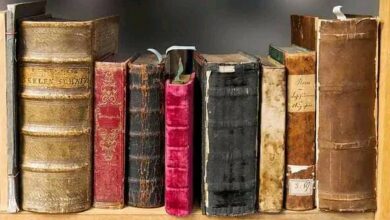
Among its most notable sections is the Qur’an and Manuscripts Gallery, which contains rare Qur’ans and manuscripts from different regions and historical periods, including examples dating back to the 9th and 10th centuries CE. The collection also includes scientific manuscripts covering fields such as astronomy, mathematics and medicine.
The museum’s Qur’anic holdings include manuscripts from Iran, Indonesia, Central Asia and other parts of the Islamic world, featuring various calligraphic traditions such as Hijazi and Kufic scripts. Among the highlights are a 17th-century Iranian Qur’an, a Qur’an preserved in a wooden box from Aceh, Indonesia, and pages associated with the renowned “Blue Qur’an.”
The collection also features a Qur’an from China’s Qing Dynasty decorated with gilded Chinese motifs, reflecting the diversity of artistic styles developed in different Muslim societies for copying and illuminating the Holy Qur’an.
Beyond Qur’anic manuscripts, the museum displays a wide range of Islamic artifacts, including carpets, textiles, ceramics, jewelry, coins, metalwork, woodwork and weapons. Dedicated galleries also explore Islamic art from regions such as India, China and the Malay Peninsula, as well as architectural models inspired by important Islamic landmarks, including the Grand Mosque in Mecca and the Dome of the Rock.
Located near Malaysia’s National Mosque in Kuala Lumpur, the museum building itself incorporates Islamic and Iranian architectural influences, featuring a turquoise dome, mosaic decorations and Qur’anic inscriptions. Parts of its decorative elements were restored in 2016 with the participation of Iranian artist Mohammad Kavand.
The museum also includes a specialized library on Islamic art, containing historical and modern publications. Through its collections and exhibitions, the institution serves as a center for preserving Islamic manuscripts and artifacts while presenting the artistic and cultural diversity of Islamic civilization, particularly across Asia.