

United Nations: Human Rights Conditions in Myanmar Reach “Worst Levels Ever”
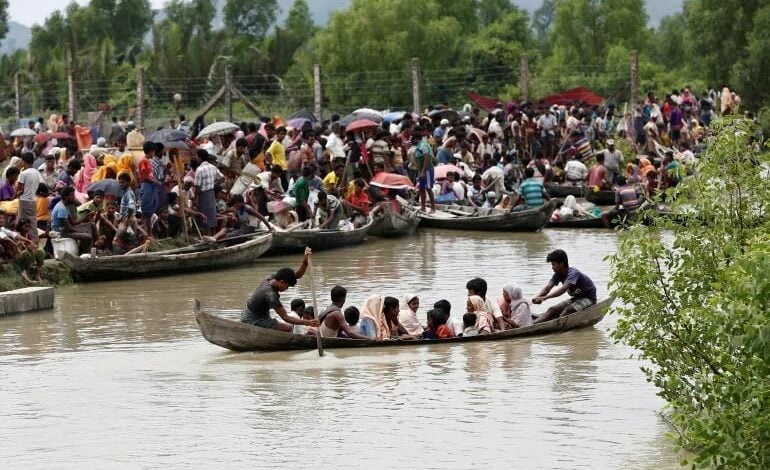
United Nations: Human Rights Conditions in Myanmar Reach “Worst Levels Ever”
The United Nations has warned of an unprecedented deterioration in human rights conditions in Myanmar, stating that they have reached “the worst levels ever.” This situation is attributed to the ongoing conflict and violations against civilians, particularly the Muslim Rohingya minority, as well as the expanding scope of illicit economic activities linked to the conflict.
A report issued by the United Nations High Commissioner for Human Rights on Tuesday highlighted that the continuation of military operations, violence, and the escalation of what is described as a “conflict economy” are imposing increasing humanitarian burdens on the population.
The report documented widespread and systematic violations committed by the Myanmar military and the Arakan Army, which controls most of Rakhine State, against the Rohingya Muslims. These violations include killings, torture, arbitrary detention, displacement, as well as forced recruitment and labor.
The United Nations affirmed that the Rohingya continue to face systematic discrimination, nine years after the massive displacement wave in 2017 that forced hundreds of thousands of them to flee. Violations have worsened following the military coup in 2021.
According to the report, the military continues to employ aerial bombardment, deliberate burning operations, and restrictions on humanitarian aid access, resulting in the deaths of at least 8,075 civilians since 2021, including 1,774 women and 1,074 children. However, the United Nations suggests that the actual toll may be significantly higher.
The report, which covers the period from June 2025 to May 2026, notes that the number of internally displaced persons has risen to 3.6 million, while 12.4 million people are facing severe levels of hunger, with approximately 400,000 mothers and children suffering from acute malnutrition.
The High Commissioner also highlighted the expansion of illegal rare-earth mineral mining activities, warning that the collapse of the rule of law has enabled the flourishing of illicit economic activities that contribute to financing the conflict.
Satellite images, according to the report, show the establishment of 302 new mining sites in Kachin State since 2021, while the number of mining sites in Shan State increased from 12 before the coup to 85 afterward, indicating the expansion of the illicit economy alongside the ongoing political and humanitarian crisis in the country.