
Astronomical Observatories Await Deep Partial Lunar Eclipse
Astronomical Observatories Await Deep Partial Lunar Eclipse
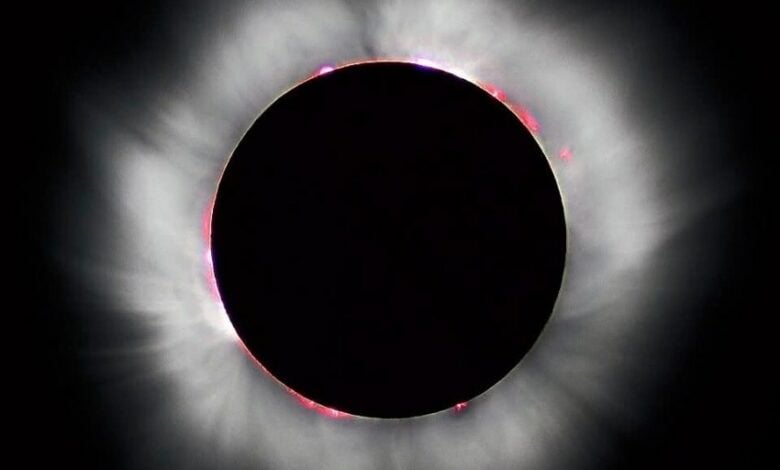
Astronomical observatories around the world are preparing to observe a deep partial lunar eclipse on the night of August 27–28, during which more than 96 percent of the Moon’s disk will be covered globally, bringing the phenomenon close to a total lunar eclipse.
According to astronomical calculations for Baghdad, residents will only be able to observe the early stages of the phenomenon in the early hours of Friday, August 28, as the Moon will set before the main stages of the partial eclipse begin.
The Moon is expected to enter Earth’s penumbral shadow at 4:23 a.m. Baghdad time, causing a gradual and slight dimming of its disk.
The phenomenon will reach its maximum observable stage from Baghdad at around 5:30 a.m., before the Moon sets completely below the western horizon at 5:33 a.m. The main stages of the eclipse will continue afterward but will not be visible from the capital.
In this regard, Muslims are required to perform Salat al-Ayat when a lunar or solar eclipse begins, according to the rulings of Grand Ayatollah Sayyid Sadiq al-Husseini al-Shirazi.
The prayer is performed by making the intention and saying the opening takbir, then reciting Surat al-Fatihah and a complete surah before bowing. The worshipper then rises, recites Surat al-Fatihah and another complete surah, and bows again. This is repeated until completing five bows. After rising from the fifth bow, the worshipper performs two prostrations, then stands for the second rak‘ah and repeats the same procedure as in the first, before reciting the tashahhud and concluding with the salam.