
Poland: A Mosque Exhibition Documents a Century Since the Establishment of the Islamic Religious Union
Poland: A Mosque Exhibition Documents a Century Since the Establishment of the Islamic Religious Union
The Islamic Religious Union in Poland celebrated the centenary of its founding by organizing an exhibition titled “Mosques and Prayer Places in Poland,” documenting aspects of the history of Muslims and the contemporary Islamic presence in the country.
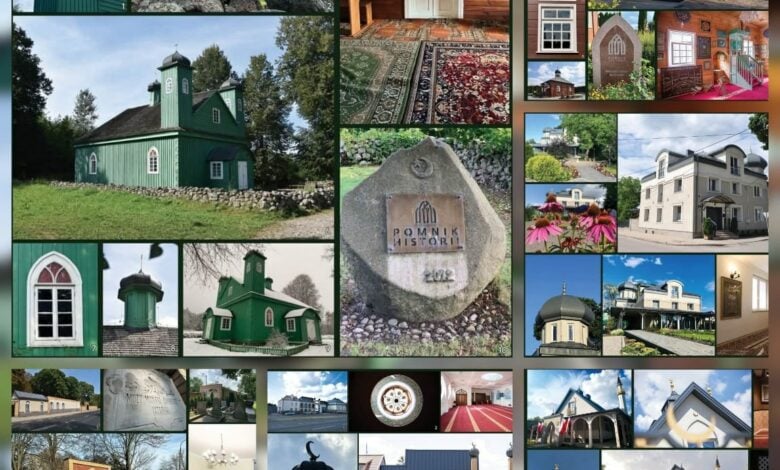
The exhibition features eight informational panels combining photographs with historical and architectural data, showcasing a collection of prominent mosques, Islamic centers, and prayer places scattered across Polish cities, highlighting the evolution of Muslim religious life through different historical periods.
The exhibition underscores several historic mosques, foremost among them the wooden Bohoniki and Kruszyniany Mosques, which stand as prominent witnesses to the Islamic heritage of the Tatars who settled in Poland and preserved their religious and cultural identity over the centuries.
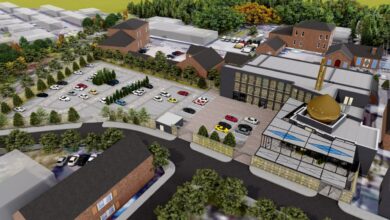
It also showcases the Białystok Mosque, whose building became the property of the Muslim community in 1981 and has since served as a center for prayer, education, and religious activities. Alongside it is the Gdańsk Mosque, which merges modern architecture with traditional Islamic elements, fulfilling religious, educational, and cultural roles.
The exhibition also includes the Tatar Islamic Cultural Center in Sokółka, documenting the history of the Tatars and mosques in Poland and neighboring areas, as well as the prayer hall associated with the Tatar Islamic Cemetery on Tatar Street in Warsaw, where prayers and religious and cultural events are held.
The exhibition further highlights the Islamic Cultural Center in Warsaw, which provides spaces for worship, education, meetings, and social activities, serving as a model reflecting the development of contemporary Islamic institutions in the Polish capital.
The exhibition aims to inform about the history of Muslims in Poland and highlight the role that mosques have played through the centuries, not only as places of worship but also as centers for education, social interaction, and the preservation of cultural identity and memory.
The organization of the exhibition coincides with the centennial anniversary of the establishment of the Islamic Religious Union in Poland, offering visitors a miniature map of the journey of the Islamic presence in the country, ranging from historic wooden mosques associated with Tatar heritage to modern Islamic centers and institutions.