
28th of Safar Marks Painful Martyrdom Anniversary of Holy Prophet (peace and blessings be upon him and his family)
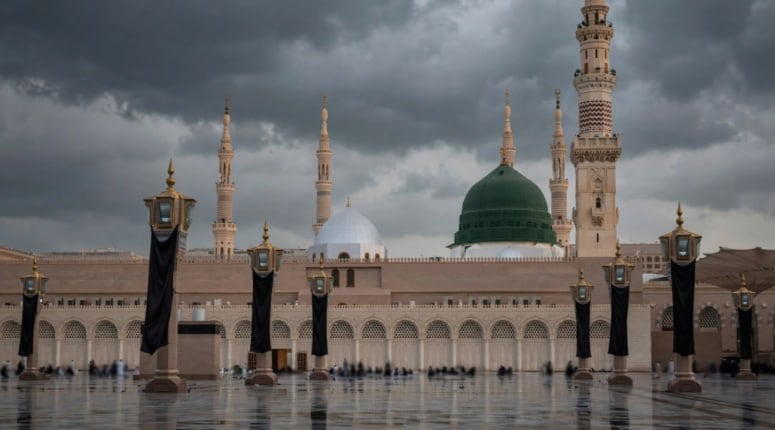
28th of Safar Marks Painful Martyrdom Anniversary of Holy Prophet (peace and blessings be upon him and his family)
———————————-
The 28th of Safar marks one of the most painful events in Islamic history: the martyrdom of Holy Prophet Muhammad (peace and blessings be upon him and his family).
More details in the following report:
According to numerous historical accounts cited in Shia and Sunni sources, this event occurred as a result of poisoning, rather than a natural death as commonly portrayed in some historical narratives. Revisiting this issue highlights further aspects of the suffering and hardships endured by the Prophet (peace and blessings be upon him and his family).
While traditional historical narratives often describe the event as a natural passing, a deeper examination of authoritative sources from both major Islamic traditions indicates another account: that the Prophet (peace and blessings be upon him and his family) was martyred as a result of poisoning.
The deliberate or unintentional avoidance of the term “martyrdom” when referring to the Prophet’s passing is itself regarded by many as one of the great manifestations of the injustice suffered by the Messenger of God (peace and blessings be upon him and his family).
The issue of the Prophet’s martyrdom is not limited to Shia sources. Prominent Shia scholars and renowned Sunni historians have also referred to this matter in their works.
In authoritative Shia works such as Basa’ir al-Darajat and Bihar al-Anwar, a narration attributed to the Prophet (peace and blessings be upon him and his family) states: “There is no prophet or his successor except that he is martyred.”
Abdullah ibn Mas‘ud, one of the prominent companions of the Prophet (peace and blessings be upon him and his family), is also reported to have affirmed that the Prophet attained martyrdom in the final years of his blessed life.
According to the Shia historical perspective, this martyrdom was connected to plots and opposition by hypocritical groups and enemies of Islam during the final years of the Prophet’s life.
Among these events was an alleged attempt on the Prophet’s life at the mountain pass of Aqaba after his return from Ghadir Khumm. According to these accounts, conspirators attempted to cause his camel to fall down a slope, but the plot failed by divine protection.
The tensions reached their peak during the final days of the Prophet’s life in the incident known as the “Hadith of the Pen and Paper.” According to historical reports, while the Prophet (peace and blessings be upon him and his family) was ill, he requested ink and paper to write a document that would prevent the Muslim community from going astray after him. The request was met with opposition from Umar ibn al-Khattab, who reportedly said, “The Book of Allah is sufficient for us.”
According to Shia interpretations, those who prevented the writing of this guiding document created a major obstacle to the continuation of the path of Wilayah (divine leadership).
Ultimately, Prophet Muhammad (peace and blessings be upon him and his family) passed away on the 28th of Safar, 11 AH, in Medina. According to Shia tradition, he was resting with his head upon the chest of his brother and successor, Imam Ali ibn Abi Talib (peace be upon him), and attained the rank of martyrdom.