
Shia Pilgrims Mark Eid al-Adha at Holy Shrines in Karbala, Kadhimiya, and Najaf
Shia Pilgrims Mark Eid al-Adha at Holy Shrines in Karbala, Kadhimiya, and Najaf
—————————————–
Large crowds of Shia pilgrims marked Eid al-Adha at major holy shrines in Iraq, performing prayers and devotional acts in Karbala, Kadhimiya, and Najaf. The ceremonies followed the observance of Arafah and were held under extensive security and service plans prepared to receive worshippers from inside and outside Iraq.
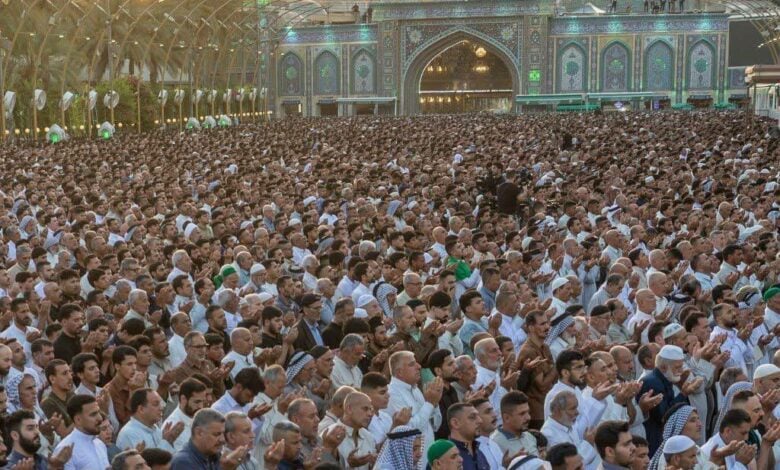
Large crowds of followers of Ahlulbayt, peace be upon them, gathered at Iraq’s holy shrines to mark Eid al-Adha with prayers, supplications, and visits to the sacred sites.
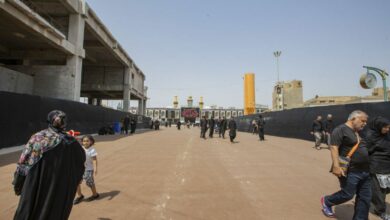
In Karbala, thousands of pilgrims performed Eid al-Adha prayers in congregation in the area between the holy shrines of Imam Hussein and Abu al-Fadl al-Abbas, peace be upon them, on Wednesday morning, the 10th of Dhu al-Hijjah. The holy shrines had prepared special worship and service programs to receive visitors who had also taken part in the rituals of the night and day of Arafah.
Pilgrims expressed joy at the arrival of Eid and prayed for the reappearance of Imam al-Mahdi, may Allah hasten his honourable reappearance. Karbala had witnessed major security preparations in recent days, with forces deployed on routes leading to the city to facilitate the movement of vehicles and pilgrims.
In Baghdad’s holy city of Kadhimiya, large numbers of worshippers gathered at the shrine of Imam Musa al-Kadhim and Imam Muhammad al-Jawad, peace be upon them, to perform Eid prayers. The shrine administration prepared religious and service programs, while security forces and volunteers worked to organize the movement of visitors and provide necessary services.
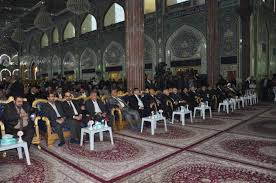
In Najaf, crowds of pilgrims spent the night of Eid al-Adha at the shrine of Imam Ali ibn Abi Talib, peace be upon him. Visitors performed recommended acts, supplications, and Ziyarat in the sacred courtyard, amid a calm and spiritual atmosphere.
The holy city of Najaf also implemented security and service measures to receive pilgrims who had arrived for the rituals of Arafah and Eid.