
UN Reports Warn of Widening Gender Justice Gap in Afghanistan as Women Protest Taliban Policies
UN Reports Warn of Widening Gender Justice Gap in Afghanistan as Women Protest Taliban Policies
————————————————
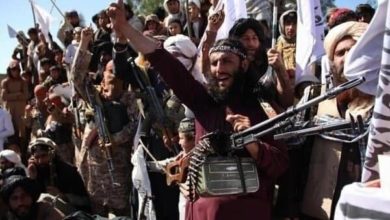
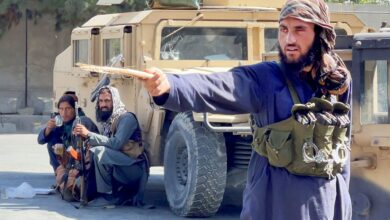
Recent reports by United Nations agencies have warned of a growing gender justice gap in Afghanistan, amid continuing restrictions imposed by the Taliban on women’s rights.
According to a statement from the United Nations Assistance Mission in Afghanistan (UNAMA) released around International Women’s Day, Afghan women are nearly four times less likely than men to access formal justice mechanisms. UN findings show that only 14 percent of women have been able to obtain official dispute resolution services, compared with 53 percent of men, leaving millions without legal protection or safe channels to report domestic or social violence.
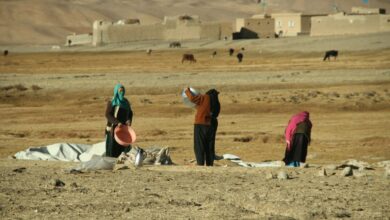
The UN Women agency said access to justice is a fundamental right essential to women’s dignity and safety, warning that denying such access increases vulnerability to abuse. The report also noted that challenges facing Afghan women extend beyond the justice system to healthcare, education, and economic opportunities.
A 2024 gender index cited in the report found that Afghanistan has the world’s second-largest gender gap, with a disparity of around 76 percent across sectors including education, health, financial inclusion, and decision-making. Afghan women are estimated to realize only 17 percent of their full potential in participation and opportunities, compared with a global average of about 60.7 percent.
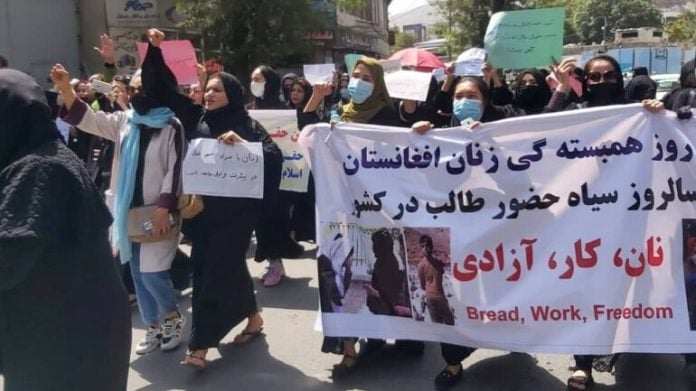
Meanwhile, a group of Afghan women staged a protest march in Kabul on the eve of International Women’s Day, demanding basic rights such as education, employment, and freedom. Protesters called on the international community to link political engagement with the Taliban to concrete guarantees of women’s rights.
Despite tight security conditions and reports of previous arrests of demonstrators, activists say women in Afghanistan continue to organize protests, informal schools, and community gatherings in an effort to preserve their role in society. Human rights observers warn, however, that such movements may weaken without sustained international support and pressure.