
Ancient Timbuktu Manuscripts Inspire U.S. Students, Highlight Islam’s Tradition of Knowledge
Ancient Timbuktu Manuscripts Inspire U.S. Students, Highlight Islam’s Tradition of Knowledge
——————————————
A small Islamic college in rural Virginia is using centuries-old African manuscripts to reconnect students with a scholarly Islamic heritage, underscoring the central role of knowledge in Islam and challenging long-held historical narratives about enslaved Africans.
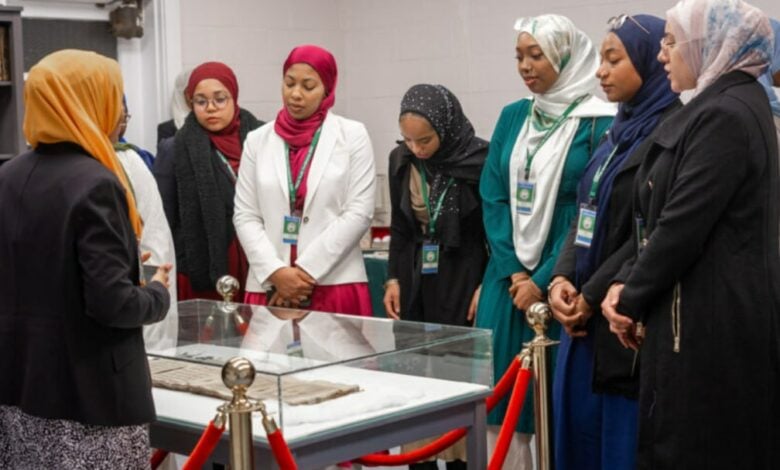
At IQOU Theological College, a collection of 17 manuscripts from Timbuktu—a renowned center of Islamic learning between the 13th and 17th centuries—has been on display for two years. The texts cover subjects including theology, law, and astronomy, reflecting a rich intellectual tradition that predates the transatlantic slave trade.
Scholars and educators say the manuscripts highlight Islam’s deep emphasis on learning, a core principle rooted in the faith’s early teachings that elevate the pursuit of knowledge as a religious duty. For many students, particularly African American Muslims, the collection offers a tangible link to an often-overlooked legacy of literacy and scholarship among their ancestors.
The manuscripts were preserved by Malian archivist Abdel Kader Haidara, who safeguarded thousands of documents during conflict in Mali. Their temporary placement in the United States has provided rare access to materials typically housed in West Africa.
Educators at the college say the initiative comes at a time when concerns are growing over misinformation about Islam online, emphasizing the need for structured, credible religious education. Students and faculty alike describe the manuscripts as a powerful reminder that Islamic civilization has long been built on the pursuit, preservation, and transmission of knowledge across generations.