

BrainBots Nanorobots Use Near-Infrared Light to Increase Drug Delivery to Brain Fivefold
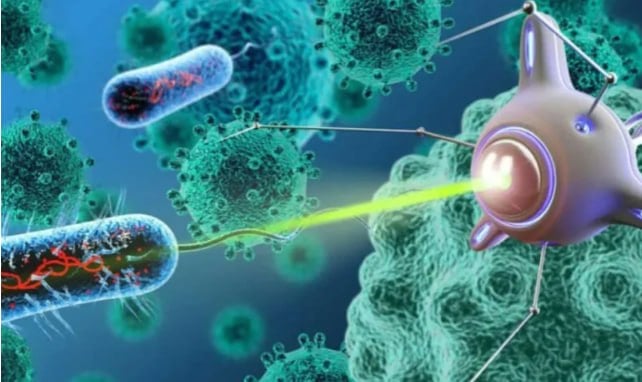
BrainBots Nanorobots Use Near-Infrared Light to Increase Drug Delivery to Brain Fivefold
————————————————
Researchers at the California Institute of Technology (Caltech) have developed microscopic robots known as “BrainBots” designed to deliver drugs across the blood-brain barrier using near-infrared light. Tests conducted on mice with glioblastoma brain tumors showed that the technology increased drug delivery to the brain by approximately fivefold compared with non-activated nanorobots.
The nanorobots, made from biodegradable and biocompatible materials, are activated by near-infrared light after being introduced into the bloodstream. Light-induced heating triggers gas release within their structure, generating propulsion that helps them approach and cross the blood-brain barrier. Special DNA molecules known as aptamers enable the nanorobots to attach to cells lining the barrier and facilitate their passage into brain tissue, where they break down and release their drug payload.
In experiments using the chemotherapy drug doxorubicin, researchers found that the technology slowed tumor growth and extended the survival of mice with glioblastoma. The experiments also indicated that the treatment did not cause detectable damage to the blood-brain barrier and reduced systemic toxicity compared with conventional drug administration.
Despite these promising findings, BrainBots remain at the preclinical research stage and have not been approved for human treatment. Further studies are needed to assess their long-term safety, biodegradation, effectiveness and the challenges of delivering near-infrared light to the brain before clinical trials can be considered.