
“Tamām Nahj al-Balāghah”: A Comprehensive, Documented Compilation of Imam Ali’s Sayings Presented to Pope Leo XIV
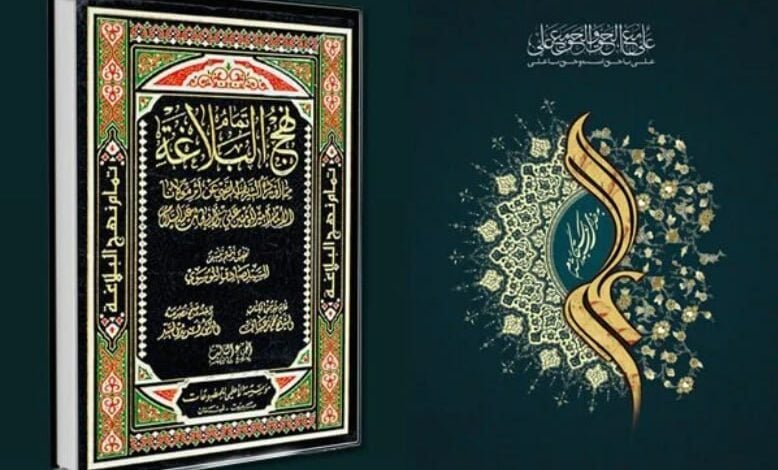
“Tamām Nahj al-Balāghah”: A Comprehensive, Documented Compilation of Imam Ali’s Sayings Presented to Pope Leo XIV
———————————————
The prestigious work Tamām Nahj al-Balāghah by Sayyid Sadiq Mousavi Shirazi—completed after twenty-eight years of extensive research—has been formally presented to Pope Leo XIV.
According to reports viewed by Shia Waves Agency, the gesture has been widely viewed as a symbol of interfaith dialogue, peaceful coexistence, and the sharing of the spiritual legacy of Imam Ali (peace be upon him) with the contemporary world.
The book is the result of nearly three decades of scholarly investigation, during which the author visited more than sixty major libraries across the world—including in Egypt, Yemen, Morocco, Damascus, Rome, Paris, London, and Austria—and examined over 60,000 volumes and manuscripts. Through this effort, he produced a fully sourced and systematically organized collection of the sermons, letters, supplications, maxims, and counsels of Imam Ali (peace be upon him).
The work responds to gaps and omissions found in the classical Nahj al-Balāghah of al-Sharif al-Radi. Unlike previous editions, which often included unsourced or incomplete narrations, Tamām Nahj al-Balāghah provides full chains of transmission and precise references for every text, enabling researchers and readers to easily verify the material.
The main text appears in bold script, with supplementary material in lighter script and accompanied by detailed citations, facilitating academic and scholarly use. Its structure combines thematic organization with historical sequencing, allowing researchers to understand context and textual relationships more accurately. This refined arrangement also resolves a number of ambiguities and manuscript discrepancies found in earlier works.
A beautifully produced copy of the book was recently gifted to Pope Leo XIV. Sheikh Ali Khatib, Vice President of Lebanon’s Supreme Islamic Shiite Council, described the gesture as “a message of peaceful coexistence and interreligious dialogue,” reflecting Lebanon’s commitment to cultural diplomacy and social harmony. Positive reactions from the Vatican and the UN Secretary-General highlighted the work’s cultural and international significance.
Tamām Nahj al-Balāghah stands as a bridge between devotion to Nahj al- Balāghah and rigorous hadith scholarship, opening new pathways for academic, seminary, and media research. Beyond its scholarly value, it conveys a universal message of wisdom, ethics, and interfaith understanding.