
Taliban Policies Deepen Crisis for Afghan Women as Education Ban and Rights Violations Persist
Taliban Policies Deepen Crisis for Afghan Women as Education Ban and Rights Violations Persist
————————————-
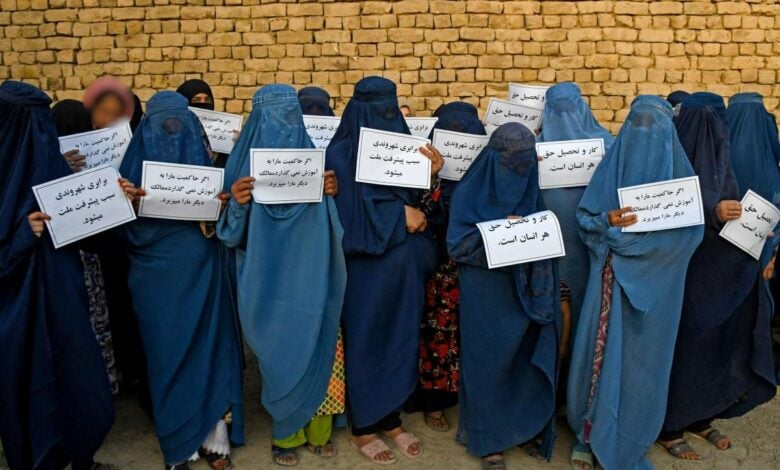
Four years after the Taliban returned to power in August 2021, restrictions on women’s rights—particularly access to education—have become entrenched, according to international data and rights groups.
Reports from global organizations indicate that more than 1.2 million Afghan girls have been barred from secondary and higher education since authorities closed girls’ high schools in 2021 and universities to women in December 2022. This has made Afghanistan the only country in the world to formally prohibit girls’ education on such a wide scale. Figures released by UNESCO in February 2026 show that only 17 percent of girls of secondary-school age are able to continue their studies nationwide, a rate that falls below 5 percent in rural areas.
Taliban officials have justified the policy by citing religious principles and the lack of infrastructure for gender segregation. While some officials have privately acknowledged internal disagreements over reopening schools, a recent religious opinion by Afghanistan’s Council of Scholars stating that girls’ education up to grade 12 is permissible has yet to translate into policy.
In response, human rights groups and non-governmental organizations have attempted to expand online education for girls. These efforts face major obstacles, including limited digital infrastructure—only 19 percent of Afghan households have high-speed internet, compared with 4 percent in rural areas—and low smartphone ownership among women, estimated at 11 percent. Poverty, which affects about 78 percent of the population, further limits families’ ability to afford internet access. Power outages and curricula not adapted to local languages also undermine these initiatives.
Warnings from the World Bank suggest that excluding women from education and the workforce could reduce Afghanistan’s gross domestic product by up to 18 percent by 2035. At the same time, early marriage rates have risen sharply, with 63 percent of girls marrying before age 18 in 2025, up from 45 percent in 2021.
Parallel to the education crisis, rights abuses have intensified. The Afghanistan Women’s Rights Observatory reported documenting 411 violations against women and girls in 2025, including around 300 cases of direct violence attributed to Taliban forces. The findings were presented at a seminar in Kayseri, with data gathered from victim testimonies and international sources. The report recorded at least 76 killings of women and girls, the highest number occurring in Nangarhar, as well as more than 30 cases of suicide or self-immolation.
Underground “home schools” run by former teachers have emerged in cities such as Kabul, Herat and Mazar-i-Sharif, but remain at constant risk. Rights groups say more than 80 teachers have been arrested this year for unauthorized teaching, with at least 23 still in detention.
Activists warn that, without sustained international engagement, Afghanistan faces the prospect of a generation of girls deprived of education and basic rights, with long-term social and economic consequences.