
Al-Qaradaghi proposes establishing “Islamic United Nations” to support global peace efforts
Al-Qaradaghi proposes establishing “Islamic United Nations” to support global peace efforts
———————————————
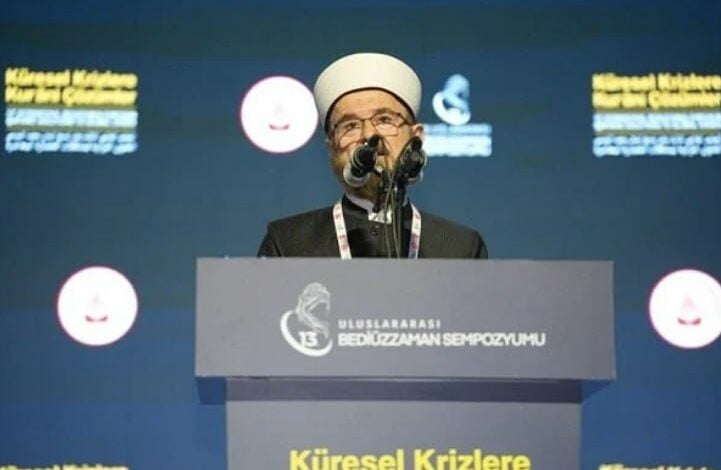
The President of the International Union of Muslim Scholars, Dr. Ali Mohiuddin al-Qaradaghi, has proposed the establishment of an “Islamic United Nations” as a platform to contribute to achieving international peace and security.
Al-Qaradaghi made the proposal during the opening session of the 13th International Conference on Bediuzzaman Said Nursi, held in Istanbul under the theme “Qur’anic Solutions to Global Crises,” with the participation of scholars, researchers, and thinkers from 60 countries.
He said that the humanitarian and ethical challenges facing the world have become shared global issues that go beyond national and social boundaries, calling for solutions that address humanity as a whole rather than focusing only on the concerns of Muslims.
Al-Qaradaghi stressed the need to move from identifying problems to developing practical initiatives, suggesting the creation of an “Islamic United Nations for Peace and International Security.” He called for the involvement of scholars, legal experts, and specialists to study the proposal and develop it into an actionable project.
He also criticized the structure of the UN Security Council, particularly the veto power held by its five permanent members, and called for exploring alternative mechanisms through specialized committees and expert bodies.
The scholar urged Muslims to strengthen intellectual unity based on the Quran and Sunnah, while expanding cooperation in science, civilization, production, creativity, and innovation, and focusing on common values despite differences.
Addressing the situation in Gaza, al-Qaradaghi said the ongoing war reflects, in his view, a broader international humanitarian and moral crisis, highlighting what he described as the failure to protect civilians and prevent injustice.
He concluded by emphasizing the importance of reforming individuals and societies through ethical and intellectual development, referring to the ideas of Bediuzzaman Said Nursi and his approach to addressing social challenges through Quranic principles.