
Muslim Communities Worldwide: Resilience Amid Challenge, Growth Through Faith and Education
Muslim Communities Worldwide: Resilience Amid Challenge, Growth Through Faith and Education
————————————-
From condemnation of hate crimes in Europe to growing interest in Islam in Asia and expanding religious education in North Africa — several recent developments highlight both the challenges and growth of Muslim communities globally.
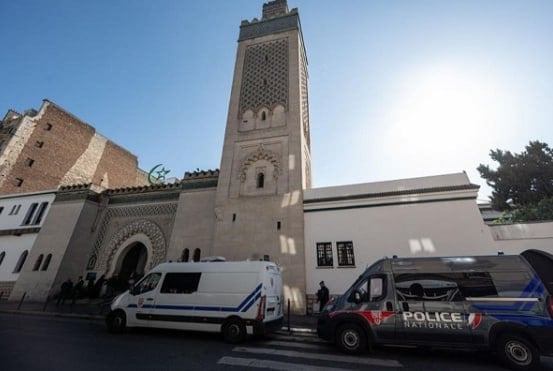
In France, the French Muslim Council issued a strong condemnation after a break‑in at a mosque where attackers desecrated copies of the Qur’an. According to IQNA, council representatives said they were “deeply shocked,” stressing that such hate‑motivated actions target the core of Muslim identity and demand solidarity from the broader society.
The incident has reignited concerns over rising Islamophobia and intolerance in Europe. Community leaders called on authorities to enhance protection for places of worship and to prosecute perpetrators — underlining that attacks on sacred texts are attacks on fundamental religious freedoms.
Meanwhile, in Asia, an unexpected trend is emerging: a surge in interest in Islam among South Koreans. According to a report on the success of Islamic‑initiation courses, as covered by IQNA, an increasing number of South Koreans are enrolling in basic courses on Islam. Many cite spiritual curiosity, intercultural awareness, or personal transformation as motivations.
This trend speaks to the appeal of Muslim identity beyond traditional cultural boundaries — illustrating Islam’s capacity to offer meaning and community even in non‑Muslim majority countries. The report characterizes this as a hopeful sign of cross‑cultural religious dialogue and personal growth.
In North Africa, in Morocco, educational expansion is underway: according to recent data cite by IQNA, around 300 Qur’anic schools currently host approximately 300,000 students. These institutions provide religious instruction as well as social and community support, deeply rooted in local tradition.
Administrators say that in addition to teaching the Qur’an and Islamic ethics, many of these schools — known as “madrasa” or “kuttab” — help preserve cultural heritage and community cohesion in rural and urban areas alike.