
India Debates Hindu-Muslim Unity as Owaisi Questions RSS Positions
India Debates Hindu-Muslim Unity as Owaisi Questions RSS Positions
——————————————
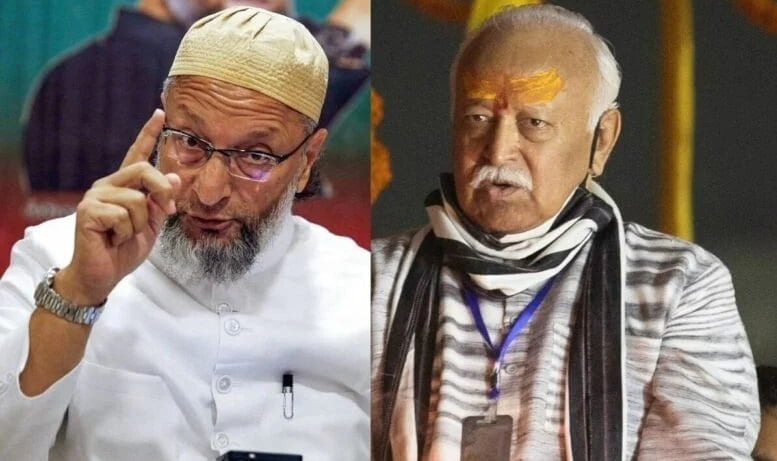
A political debate has emerged in India over Hindu-Muslim unity following remarks by Rashtriya Swayamsevak Sangh (RSS) chief Mohan Bhagwat regarding relations between Hindus and Muslims and the place of Muslims in Indian society. All India Majlis-e-Ittehadul Muslimeen (AIMIM) president and Indian parliamentarian Asaduddin Owaisi called for Bhagwat’s statements to be examined alongside the historical positions and writings of prominent thinkers associated with the Hindu nationalist movement.
Owaisi’s comments came in response to remarks Bhagwat made in New York concerning relations between Hindus and Muslims. Owaisi argued that the RSS’s position toward Muslims and other minorities should not be assessed solely on the basis of its current public statements, but also through an examination of its intellectual history and the positions of its former leaders.
Owaisi referred to writings attributed to several prominent figures associated with the Hindutva movement and the RSS, including the organization’s founder and former leaders. He argued that some of these historical positions raise questions about the organization’s views on religious unity, pluralism, and the status of minorities in Indian society.
He also cited historical writings that he said contained critical views of efforts to promote Hindu-Muslim unity during India’s independence period, as well as views concerning Muslims and Christians that he considered inconsistent with the message of coexistence and unity currently being presented by the organization’s leadership.
Owaisi linked his criticism to several contentious issues in India, including the violence in Gujarat in 2002, personal-status matters, anti-conversion laws, and security legislation. He argued that policies affecting minorities should also be taken into account when assessing the RSS’s current rhetoric.
He called for the organization’s present-day public positions to be examined critically alongside its intellectual and historical legacy, saying that the public should be able to form its own assessment based on the statements, practices, and writings associated with the Hindu nationalist movement.
In contrast, an executive member of the All India Muslim Personal Law Board adopted a more moderate position toward Bhagwat’s remarks, describing them as carrying a positive message. However, he stressed that their real significance would depend on whether they were translated into concrete practices within Indian society.
He said calls for Hindu-Muslim unity should be reflected at the grassroots level and in public life in order to gain credibility and have a meaningful impact on coexistence among the different communities that make up Indian society.
Meanwhile, a Congress Party leader questioned why Bhagwat chose to deliver his message on Hindu-Muslim unity during a visit to the United States rather than focusing on the issue within India. He argued that the real discussion about the situation of Muslims should take place in light of developments and practices inside the country.