
British Academic: Islamophobia Is Political and Racist Project That Threatens Rights and Could Lead to Genocide
British Academic: Islamophobia Is Political and Racist Project That Threatens Rights and Could Lead to Genocide
——————————————-
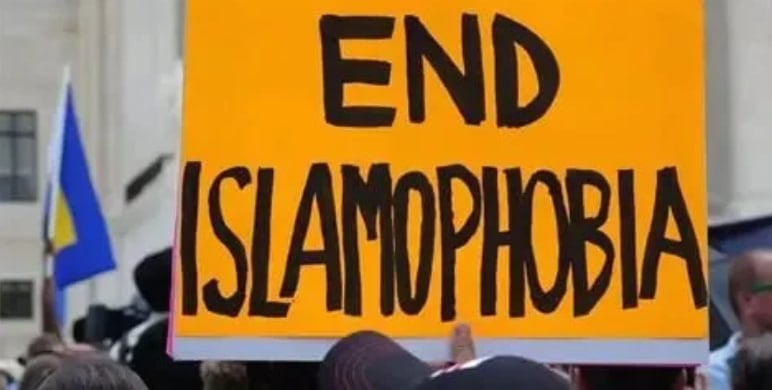
British academic Professor Salman Sayyid, professor of postcolonial thought and social theory at the University of Leeds, has warned of the growing danger of Islamophobia, saying it is no longer limited to individual hatred or prejudice but has become a political and institutional project with racist dimensions.
In an interview with Anadolu Agency, Sayyid said Islamophobia aims to restrict Muslims’ ability to express their religious identity and participate in public life. He said it ranges from daily discrimination and individual attacks to institutional policies that reinforce exclusion.
Sayyid stressed that reducing Islamophobia to isolated incidents hides its wider political and ideological nature. He added that it is not necessarily linked to personal hatred, but can appear through institutional practices adopted by individuals as a result of policies or working mechanisms.
He said the core of Islamophobia lies in portraying Islamic identity as a threat that must be restricted and pushed out of public space.
The British academic pointed to modern historical examples of the catastrophic consequences of this logic, citing the experiences of Muslims in Bosnia, Chechnya, East Turkestan, Kashmir, and Arakan. He also said the Palestinian cause has become a global symbol of resistance to colonialism and discrimination, adding that rhetoric dehumanizing Palestinians is one expression of contemporary Islamophobia.
Sayyid said confronting Islamophobia cannot be limited to interfaith dialogue or introducing people to Islam. Instead, he argued, it must be recognized as a form of racism linked to rising ethno-nationalist tendencies.
He called for an organized political and social response, along with the creation of civil networks capable of defending rights and freedoms.
Sayyid emphasized that combating Islamophobia is also connected to defending justice and human rights, saying collective action and community organization are the most effective ways to confront discrimination, protect pluralism, and preserve coexistence against hate speech and exclusion.