

New Astronomical Evidence Raises Possibility of a Giant Planet Beyond Neptune
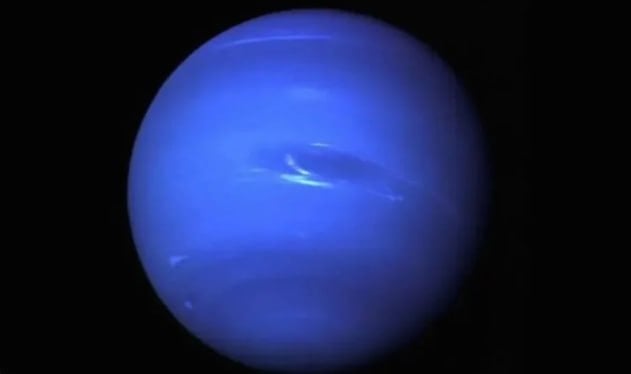
New Astronomical Evidence Raises Possibility of a Giant Planet Beyond Neptune
Astronomers have identified unusual orbital patterns among distant objects in the outer Solar System, raising the possibility that an undiscovered giant planet may exist beyond Neptune. Researchers have provisionally named the hypothetical object “Planet X2,” distinguishing it from the previously proposed Planet Nine.
The hypothesis is based on two groups of celestial objects with unusual orbital characteristics. One group consists of objects travelling in highly inclined orbits relative to the orbital plane of most planets, while the other includes objects whose closest approaches to the Sun lie far beyond Pluto’s orbit.
According to the researchers, computer simulations based on the gravitational influence of known giant planets have been unable to fully explain these orbital patterns. This has prompted investigations into whether an additional, undiscovered planet could be influencing the objects through its gravitational pull.
Planetary scientist Jonti Horner of Australia’s University of Southern Queensland told ScienceAlert that the unexplained orbital behaviour has led researchers to consider the possibility of another planetary body in the distant Solar System.
Detecting such an object presents significant challenges because sunlight at Neptune’s distance is approximately 900 times weaker than at Earth’s orbit, making distant planets extremely difficult to observe. However, advances in telescope technology and sensitivity have enabled astronomers to identify more trans-Neptunian objects and study their orbital distributions in greater detail.
Scientists stress that Planet X2 remains a theoretical possibility based on indirect astronomical evidence. It has not yet been directly observed, and further observations and computer simulations are required to determine whether such a planet actually exists.