
Germany Hosts International Conference on Interfaith Cooperation for Environmental Protection
Germany Hosts International Conference on Interfaith Cooperation for Environmental Protection
——————————–
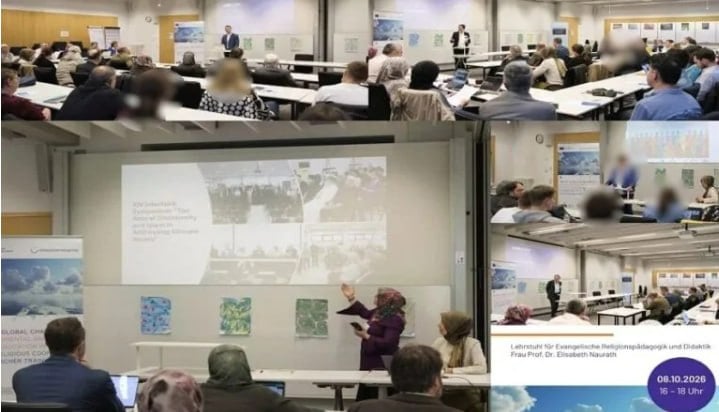
Academic institutions from Germany, Austria, Spain, Albania and Malaysia presented the results of an international project promoting interfaith cooperation in environmental protection, climate education and sustainable development at a conference hosted by the University of Augsburg on October 8, 2026.
The closing conference of the Interreligious Education for Sustainable Development project took place at the university’s Climate Resilience Center under the title “Addressing Global Challenges: Environmental and Peace Education through Interreligious Cooperation in Teacher Training.” The initiative is part of the Religions for the Environment project, supported by the European Union’s Erasmus+ programme.
Led by the University of Augsburg, the international partnership includes academic institutions from the five participating countries, including the International Islamic University Malaysia and Bedër University College in Albania. It seeks to develop educational resources linking religious and ethical responsibilities with nature conservation and efforts to address climate change.
Elisabeth Naurath, president of Religions for Peace Germany, called for interfaith dialogue to move beyond mutual understanding toward practical cooperation, stressing the need for collective action across religious and cultural boundaries to address global challenges.
Genti Kroia, president of Religions for Peace Europe, highlighted the role of religious and academic institutions in translating dialogue into concrete initiatives. He emphasized the protection of water, rivers and natural resources as an ethical responsibility toward future generations.
Participants stressed the importance of integrating environmental education and climate justice into teacher-training programmes. They said equipping educators with appropriate knowledge and resources could help children and young people develop sustainable practices and greater environmental responsibility.
The conference also reviewed the project’s outputs, including educational materials, a practical guide, online resources and a documentary film. Discussions examined how these resources could be incorporated into formal education and youth activities organized by mosques and churches.
The programme also included a presentation of The Well Project and a fundraising appeal, highlighting efforts to connect ethical principles with solidarity and community engagement.
The initiative aims to strengthen cooperation between religious and academic institutions, using shared values and educational programmes to advance environmental protection, foster a culture of peace and support sustainable development.