

Bosnian Quran Translator Calls for Contemporary Scientific Approach to Quranic Interpretation
Bosnian Quran Translator Calls for Contemporary Scientific Approach to Quranic Interpretation
—————————————–
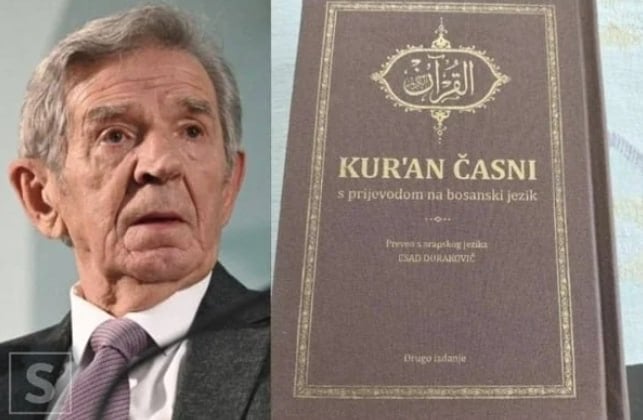
Bosnian researcher and Quran translator Asad Duraković has called for a renewed scientific and institutional approach to interpreting the Quran, arguing that its guidance should engage more directly with contemporary human and social challenges.
Duraković said the Quran should not be approached solely through rituals and worship, but also with spiritual and intellectual curiosity aimed at understanding modern issues and drawing on its teachings in daily life.
He argued that some traditional and conservative approaches have contributed, in his view, to stagnation in parts of the Muslim world. He called on scholars and religious figures to reassess methods of Quranic interpretation and strengthen dialogue between religious knowledge and other fields of science.
Discussing his Bosnian translation of the Quran, Duraković said the first edition was published in Sarajevo in 2004 and was motivated primarily by his faith. He stressed that no Quran translation can be considered definitive because changing generations and contexts require renewed efforts to convey the text’s meanings.
He also highlighted the difficulty of reproducing the Quran’s stylistic, rhythmic and rhetorical qualities in another language.
Duraković stressed the universal nature of the Quran’s message, citing Quran 49:13, which speaks of humanity being created as peoples and tribes “that you may know one another.” He said mutual understanding and cooperation should be emphasised in confronting Islamophobia and conflict.
He also encouraged young Muslims to engage with the Quran through a contemporary and open-minded understanding, arguing that a more active role for the text in different areas of life could help address intellectual and moral challenges facing modern societies.
Duraković is known for his work on Arabic literature and translation and has authored and translated numerous works, including One Thousand and One Nights. In 2003, he received the Sharjah Prize for Arab Culture, awarded in cooperation with UNESCO.