
World Bank: Security Spending Dominates Taliban Administration’s Budget as Economic Pressures Mount
World Bank: Security Spending Dominates Taliban Administration’s Budget as Economic Pressures Mount
—————————————-
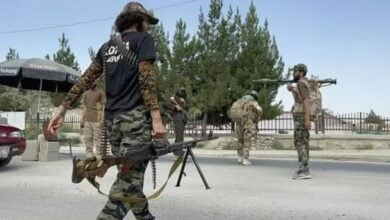
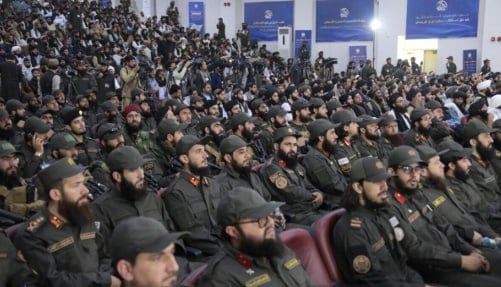
A new World Bank report shows that security accounted for nearly half of the Taliban administration’s spending in Afghanistan during the current fiscal year, surpassing combined allocations for education, health, agriculture, infrastructure and private-sector development.
According to the World Bank’s August 2026 Afghanistan Economic Monitor, security expenditure reached 51.3 billion afghanis (about $787 million), representing 45.2% of total government spending so far this fiscal year.
Education received 18.3 billion afghanis ($281 million), accounting for 16.1% of expenditure, while health spending stood at 2.4 billion afghanis ($37 million), or 2.1%. Agriculture received 1.2 billion afghanis ($18 million), while infrastructure and natural resources were allocated 9.4 billion afghanis ($144 million).
Other sectors included social protection with 10.9 billion afghanis ($167 million), governance with 10.8 billion afghanis ($166 million), and economic governance and private-sector development with 8.1 billion afghanis ($124 million).
The World Bank said Afghanistan’s economic momentum has weakened despite favorable rainfall and expectations of improved agricultural production. The slowdown has been linked to declining international assistance, disruptions to regional trade routes, uncertainty caused by regional tensions, and the continued return of Afghans from Iran and Pakistan, which has increased pressure on jobs, public services and household conditions.
Government spending during August reached 27.3 billion afghanis ($419 million), 31% higher than the same month in 2025. Meanwhile, domestic revenue totaled 25.4 billion afghanis ($389 million), leaving the fiscal balance under pressure.
Afghanistan’s trade deficit also widened, reaching $1.05 billion in August as imports climbed to nearly $1.2 billion while exports remained significantly lower. Iran, China and regional transit routes continued to play a major role in Afghanistan’s trade flows.
The report noted that inflation eased to 6.7% in August, while the Afghan currency strengthened against the US dollar. However, the World Bank said continued economic challenges and humanitarian pressures are limiting improvements in living standards across the country.