
Study Highlights Arbaeen Pilgrimage as Global Model of Community Management in Thought of Grand Ayatollah Shirazi
Study Highlights Arbaeen Pilgrimage as Global Model of Community Management in Thought of Grand Ayatollah Shirazi
———————————–
A research study has highlighted the administrative and organizational dimensions of the Arbaeen pilgrimage of Imam Hussein (peace be upon him), describing it as an advanced model of community management, volunteer work, and self-organization through an analysis based on the views of Grand Ayatollah Sayyid Sadiq al-Husseini al-Shirazi.
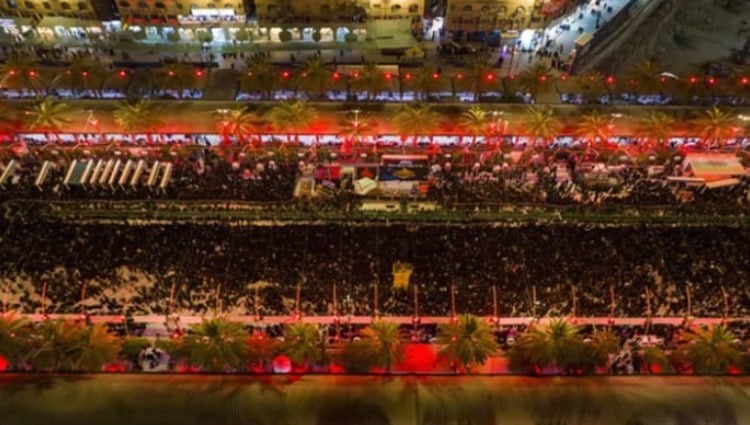
The study stated that the Arbaeen pilgrimage represents one of the world’s largest annual gatherings, attracting visitors from various countries and cultures to the holy city of Karbala. It noted that thousands of processions, organizations, and institutions participate in providing food, accommodation, medical care, transportation, and other services through a broad network characterized by cooperation and community-based organization.
According to the study, Grand Ayatollah Shirazi’s perspective views Arbaeen as an integrated civilizational system built upon Islamic values, including faith, sincerity, service to others, social solidarity, moral discipline, and voluntary cooperation. These principles, it said, contribute to a form of self-organization in which society becomes a key partner in managing the event.
The research emphasized that one of the main factors behind the success of this model is popular participation, with a large portion of services emerging from individual and collective initiatives. These include opening homes to pilgrims, establishing service stations, providing food and water, offering accommodation, and delivering healthcare, creating a flexible service network capable of responding to the growing number of visitors.
The study also examined volunteer culture as a central pillar of the Arbaeen system, highlighting services such as free transportation, pilgrim accommodation, financial support for service processions, and medical assistance for patients and elderly visitors.
It further discussed the role of Hussaini processions as social and educational institutions, the importance of media in introducing the message of Imam Hussein (peace be upon him) globally, the participation of women in service, cultural, and healthcare activities, and the role of pilgrims themselves as partners in organizing and ensuring the success of the pilgrimage.
The study concluded that the Arbaeen pilgrimage offers a practical experience that can contribute to contemporary management approaches, particularly in crowd management, community administration, volunteer coordination, ethical leadership, and crisis management. It emphasized that the success of this model is rooted in developing human values and strengthening trust, initiative, cooperation, and directing social efforts toward the common good.