
Husseini Mourning Rituals and Tradition of “Ashure” Revived Across Balkans
Husseini Mourning Rituals and Tradition of “Ashure” Revived Across Balkans
——————————
With the arrival of Muharram, countries across the Balkan Peninsula, including Bosnia and Herzegovina, Albania, and Kosovo, are witnessing the revival of long-standing mourning rituals for Imam Hussein, peace be upon him, along with the recitation of Ashura elegies in tekkes and the preparation of the symbolic dish known as “Ashure.”
These rituals reflect the deep influence of Ashura culture and devotion to Ahlulbayt, peace be upon them, within Europe.
As Muharram begins, Muslims in the Balkans renew their traditional ceremonies commemorating the Husseini uprising. The region, known for its rich Islamic heritage, sees the preparation of large pots of Ashure, a traditional votive dish made from legumes, grains, and dried fruits.
While Ashure is linked in popular belief to the salvation of Prophet Noah, peace be upon him, and his ark, in Balkan culture it is also closely connected to the tragedy of Karbala. In some traditions, its ingredients are chosen as 73 items in memory of the martyrs of Karbala, or 12 items in honor of the Twelve Imams, peace be upon them.
The cooking and distribution of this votive food among followers of different religions has become a means of social solidarity and interfaith dialogue in the region.
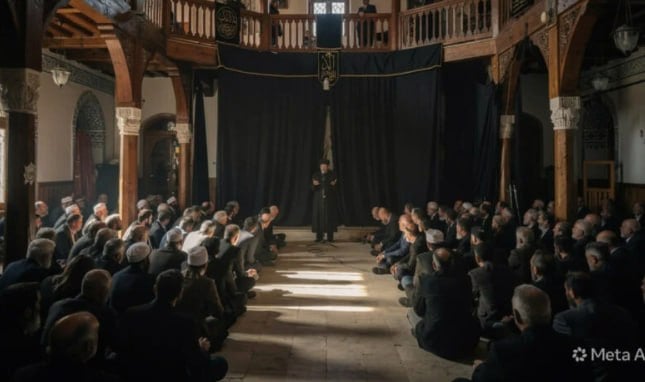
Bosnia and Herzegovina remains a major center of this devotion in southeastern Europe. During the first ten days of Muharram, historic tekkes in Sarajevo, such as the Haji Sinan Tekke, fill with mourners who take part in Maqtal recitations, mourning gatherings, and elegies remembering the suffering of Imam Hussein, peace be upon him.
In this tradition, the 10th of Muharram is known as a day of mourning. Some mourners observe silence and abstinence in sympathy with the thirst of the family of the Messenger of Allah, peace and blessings be upon him and his family, breaking their fast with a small amount of salt.
Beyond Bosnia, the days of Muharram are also regarded as a period of deep sorrow in Albania and Kosovo. Tekkes and Sufi lodges in North Macedonia and Albania host gatherings of remembrance, sermons, and discussions on the universal messages of Ashura, including freedom and justice.