
Japan Mosque Imams Council Issues Clarifying Statement Condemning New Wave of Islamophobia
Japan Mosque Imams Council Issues Clarifying Statement Condemning New Wave of Islamophobia
————————————-
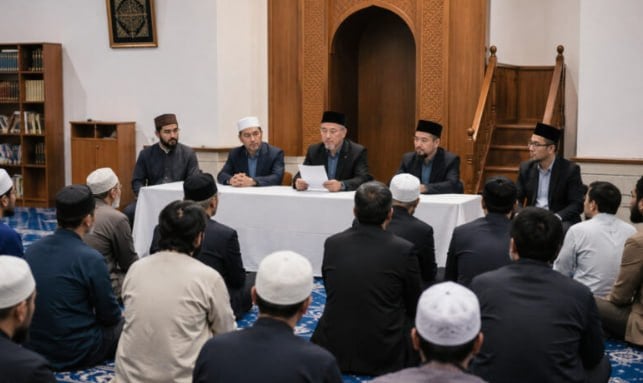
The Council of Mosque Imams in Japan has issued an official statement expressing deep concern over the sharp rise in negative rhetoric and attempts to portray Muslims as a threat to Japanese society and culture.
The council firmly condemned all forms of discrimination and hate speech, stressing the need to strengthen dialogue, uphold the law, and preserve the spirit of peaceful coexistence.
The growing trend of Islamophobic activity and the creation of psychological insecurity for religious minorities in East Asian countries have prompted religious institutions to take clear positions.
In this context, religious leaders and mosque imams in Japan issued an explanatory statement addressing movements that seek to depict the Muslim community as a danger to public order, long-standing cultural traditions, and national security.
The statement noted that Muslims, including native Japanese citizens and immigrant residents, have lived in Japan for years in peace and dignity. It emphasized their active role in development, tax contribution, and the economic welfare of society.
Referring to recent accusations and pretexts, the council stated that while respecting the constitution and addressing any administrative shortcomings in the construction of religious centers is the responsibility of every Muslim, possible individual mistakes or isolated cases must never be used as a pretext to incite collective hostility or attack the entire Muslim community.
The council also called on Muslims in Japan to maintain good neighborly relations and close cooperation with local authorities, presenting the true image of Islam as a religion of mercy, honesty, and respect for human dignity.
The statement further emphasized that Japan has long been known as a land of mutual respect and social order. Muslims, it said, will continue their social activities not as a burden or source of division, but as a means to deepen mutual understanding and strengthen stability and security in the country.