
NASA’s Webb Space Telescope Reveals Dark, Airless Super-Earth Similar to Mercury
NASA’s Webb Space Telescope Reveals Dark, Airless Super-Earth Similar to Mercury
——————————————
A newly discovered super-Earth, named LHS 3844 b, has provided scientists with a rare glimpse into the surface of a distant rocky planet, revealing it to be a dark, airless world with characteristics resembling Mercury.
LHS 3844 b, located about 48.5 light-years from Earth, is a rocky planet approximately 30% larger than Earth. It orbits a cool red dwarf star, completing an orbit every 11 hours. The planet is tidally locked, meaning one side always faces the star, while the other side remains in perpetual darkness. The dayside of the planet reaches extremely high temperatures of around 1000 Kelvin (725°C or 1340°F).
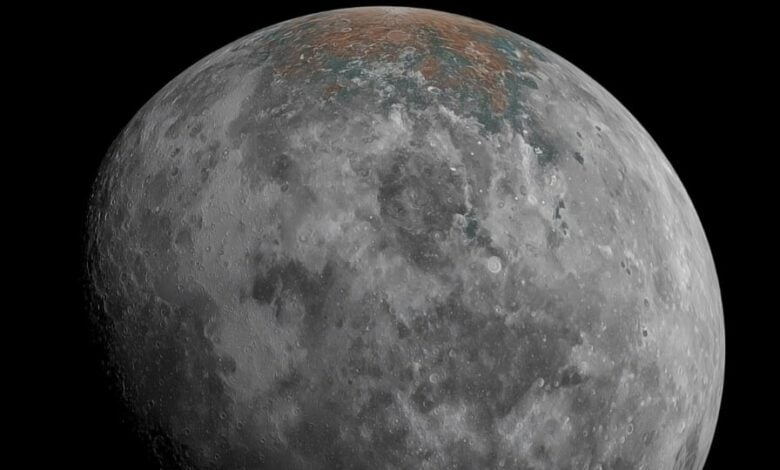
The planet’s surface was found to resemble Mercury’s, covered by dark basaltic rock, rather than silicate minerals like granite. The team used infrared light measurements to rule out an Earth-like crust, suggesting that the surface may be shaped by either recent volcanic activity or long-term space weathering from constant radiation and meteorite impacts.
Unlike planets with active volcanoes, no sulfur dioxide (SO2), a gas commonly released by volcanic activity, was detected, leading researchers to believe the planet has been geologically inactive for an extended period.
In the future, the research team plans further observations with JWST to refine the understanding of LHS 3844 b’s surface, and this method will be applied to other rocky exoplanets to learn more about their geological properties.
This discovery offers important insights into the diversity of rocky exoplanets and will enhance future studies of other worlds beyond our Solar System.